
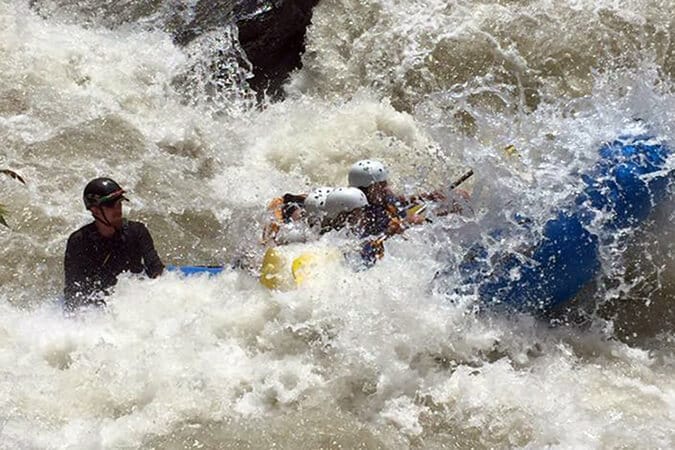
How to Handle a Raft Flip: Pro Tips from Outland Guides
So, you’re headed to the Ocoee River for an adrenaline-pumping adventure. You’ve got your gear, your crew is hyped, and the Class IV rapids of the Upper Ocoee are calling your name. But there’s one question that lingers in the back of every first-time rafter’s mind: What happens if the boat flips?
At Outland Expeditions, we like to say there are two types of guides: those who have flipped and those who will. While our expert guides are masters at “reading the water” to keep you upright, a flip is a natural part of the whitewater experience. It’s not a disaster—it’s a story in the making.
In this guide, we’re sharing the pro-level secrets our Outland guides use to manage capsizes, ensuring you stay calm, safe, and ready to get back in the action.
Why does a raft flip in the first place?
Understanding the “why” is the first step in prevention. Most flips on the Ocoee River occur when a raft loses its momentum or hits a river feature at the wrong angle.
- Losing Momentum: When your guide yells “All Forward!”, they aren’t just looking for a workout. Speed allows the raft to “punch” through hydraulics (holes). If the crew stops paddling out of fear, the raft becomes a floating leaf at the mercy of the current.
- Hitting Sideways: Rafts are designed to take waves head-on. If the boat turns sideways into a large wave or a “hole,” the water can get under the upstream tube and flip the boat over like a pancake.
- The High-Side Fail: If the boat starts to tilt, your guide will yell “High Side!” This is your cue to jump to the side of the raft that is lifting into the air. Your body weight can often pull the boat back down. If the crew stays put, the river wins.
What should you do the second the boat goes over?
The moment a raft flips, things move fast. The world goes from white foam and sunshine to quiet green water for a few seconds. The most important tip from our pros? Don’t panic.
- Trust your PFD: You are wearing a high-buoyancy Type V life jacket. It will bring you to the surface. Don’t fight the water; just wait to pop up.
- Check for the boat: Often, when you surface, you’ll be right next to the upside-down raft. Grab the “chicken line” (the rope around the perimeter). This keeps you attached to the largest “life buoy” on the river.
- Get out from under: If you surface and see blue rubber above you instead of the sky, you’re under the raft. There is a large pocket of air there, so you can breathe, but you don’t want to stay there. Choose one direction, reach out, and pull yourself along the bottom of the boat until you hit daylight.
How do you master the “Whitewater Swim Position”?
If you find yourself separated from the boat, you are now a “swimmer.” This is a standard part of the sport, and there is a specific way to do it safely. At Outland Expeditions, we call it the “Nose and Toes” rule.
- On Your Back: Float on your back with your feet pointing downstream.
- Nose and Toes Up: Keep your nose out of the water to breathe and your toes visible above the surface.
- Feet as Bumpers: By keeping your feet downstream, you can use your legs to push off any rocks you might encounter.
- Never Stand Up: This is the golden rule of river safety. Never attempt to stand in moving water. Your foot can get caught between rocks (foot entrapment), and the force of the river can push you under. Always float until you reach calm water or an eddy.
What is the guide’s role during a flip recovery?
When a flip happens, your Outland guide shifts into high-gear rescue mode. They are trained to handle the situation with military precision.
- The Headcount: The first thing a guide does is get on top of the upside-down raft to count heads. They need to see every member of the crew.
- The “Flip-Line” Maneuver: Guides carry specialized “flip lines”—webbing attached to the raft. They will lean back, using their weight and the current to pull the raft back over.
- Directing the Rescue: Your guide may tell you to swim to the boat, or they may tell you to swim for the shore. Always make eye contact and follow their hand signals. Even if the river is loud, a guide’s “point” toward safety is unmistakable.
How do you get back into the raft safely?
Getting back into a raft while wearing a wet PFD is like trying to pull a wet seal onto a dock—it takes a bit of technique.
- The PFD Pull: If you are helping someone else in, grab them by the shoulder straps of their PFD. Use the “one, two, three, HEAVE” method, using the raft’s bounce to help pull them over the tube.
- The Kick: If you’re the one in the water, help your rescuer by kicking your legs like you’re swimming. This gives you the upward momentum needed to slide over the rubber.
- Don’t Let Go of the T-Grip: If you still have your paddle, hold it! But if it’s getting in the way of your rescue, let the guide take it or toss it into the boat once you’re close.
What gear prevents a “swim” from becoming a problem?
Preparation happens at the Outland Expeditions outpost before you even see the river. Having the right gear makes a flip a minor inconvenience rather than a cold, uncomfortable ordeal.
- The Cotton Death Trap: Never wear cotton. When cotton gets wet, it stays wet, gets heavy, and saps your body heat. Stick to synthetic “wicking” fabrics like polyester or nylon.
- Secure Footwear: Flip-flops are a “gift for the river gods.” They will be gone the second you hit the water. Wear shoes with a secure heel strap, like Tevas, Chacos, or old sneakers.
- Tight PFDs: Your guide will tighten your life jacket until it feels “uncomfortably snug.” This is intentional. If it’s loose, it will float up around your ears when you’re in the water, making it harder to swim and harder for a guide to pull you back in.
How can you practice for a flip?
While we don’t usually flip on purpose, “Normalizing the Swim” is a great way to build confidence.
- Listen to the Safety Briefing: Every Outland trip starts with a detailed safety talk. We explain the “Nose and Toes” rule and the “High-Side” command. Pay attention—it’s the most important part of the day.
- The “Jump-In” Stretch: On many of our trips, there are calm sections where the guide will let you hop out and float. This is the perfect time to practice your whitewater swim position in a controlled environment.
- Core Strength: Rafting is a physical sport. Using your core to stay locked into the boat prevents many “unintentional swims.”
Conclusion
A raft flip on the Ocoee is a heart-pounding, high-energy event that most rafters end up bragging about over dinner. By staying calm, trusting your Outland Expeditions guide, and following the “Nose and Toes” protocol, you turn a potential scare into a highlight of your trip.
Our guides are the best in the business, and they are committed to your safety from the moment you leave our outpost to the final splash at the bottom of the river. Are you ready to take on the Ocoee with the pros?
Contact Outland Expeditions today to book your next whitewater adventure!
Frequently Asked Questions
Is it common for rafts to flip on the Ocoee?
While not “common,” flips are a standard possibility in Class III and IV whitewater. On more technical sections like the Upper Ocoee, the chances are slightly higher than on the Middle Ocoee. Our guides are trained to minimize this risk through expert maneuvering.
Can I raft if I don’t know how to swim?
Yes. You are required to wear a high-buoyancy, Coast Guard-approved Personal Flotation Device (PFD) at all times. This PFD is designed to keep you afloat regardless of your swimming ability. However, you should always inform your guide if you are an inexperienced swimmer so they can provide extra attention.
What is the “Nose and Toes” rule?
This is the standard safety position for swimming in a rapid. You float on your back, pointing your toes downstream and keeping your nose up for breathing. This position allows you to see what is coming and use your legs to push off obstacles.
What should I do if I get stuck under the raft?
Don’t panic. There is air underneath a flipped raft. Simply reach out, find the edge of the boat, and pull yourself out into the open water.
Will I lose my gear if the boat flips?
We recommend that you do not bring anything of value (phones, keys, expensive sunglasses) on the river. If you wear glasses, use a secure strap. “Rigged to flip” is a river term—assume everything not attached to you or the boat might be lost.


Leave a Reply
Want to join the discussion?Feel free to contribute!