
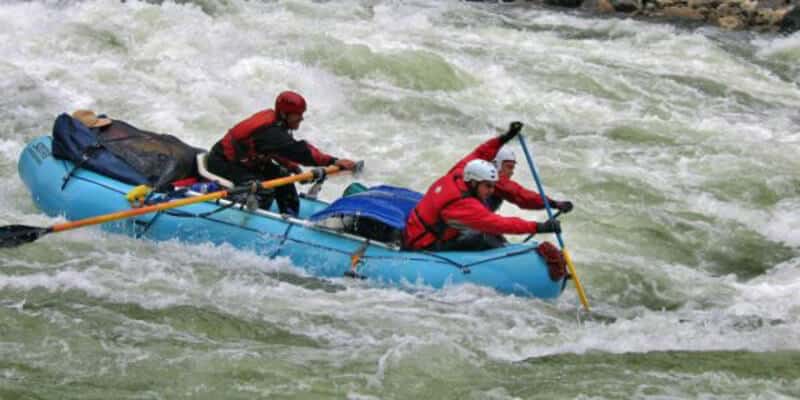
How Water Level Affects Your Ocoee River Rafting Experience
You’ve booked the cabin, rallied your friends, and set your sights on Tennessee’s premier whitewater destination. But there is one invisible factor that will define every second of your adventure: the water level.
Unlike a roller coaster that runs the same speed every time, the Ocoee River is a living, breathing entity. Its personality changes daily—sometimes hourly—based on the flow of water released from the dams above. Whether you are looking for a splashy family float or a heart-pounding, knuckle-whitening challenge, understanding how water levels work is the secret to planning the perfect trip.
At Outland Expeditions, we don’t just paddle the river; we study it. In this guide, we will break down the science of “flow rates” into plain English and explain exactly how the water level shapes your ride on the Ocoee.
What is “Flow Rate” and Why Should You Care?
If you hang around river guides long enough, you’ll hear the term CFS thrown around constantly. It stands for Cubic Feet Per Second.
Think of a basketball. A standard basketball is roughly one cubic foot in volume. If the river is flowing at 1,200 CFS, imagine 1,200 basketballs rushing past you every single second. That is a lot of power.
On the Ocoee, the flow rate is the master dial that controls three things:
- Speed: How fast the current carries your raft.
- Rapid Intensity: Whether a rapid is a fun bump or a towering wall of water.
- Technicality: How much maneuvering is required to dodge rocks versus punching through waves.
The Goldilocks Zones: Breaking Down the Numbers
The Ocoee is unique because it is dam-controlled, meaning we often get consistent, scheduled releases. However, nature (and the TVA) can still surprise us. Here is what different water levels typically look like for a rafter.
The Beginner Zone: Under 2,000 CFS
- Vibe: Playful, technical, and manageable.
- Best For: First-timers, families, and nervous paddlers.
When the river runs below 2,000 CFS, the water moves slightly slower. This doesn’t mean it’s boring—far from it. The famous rapids of the Middle Ocoee are still Class III and IV, but the lower volume makes them feel less “pushy.”
In these conditions, the river is more technical. Your guide will be using finesse to steer the raft around exposed boulders and through tighter channels. You’ll have time to recover between rapids, and if you do happen to fall out, the swim is generally calmer and easier to manage.
The Intermediate Sweet Spot: 2,000 – 3,500 CFS
- Vibe: Fast, punchy, and classic Ocoee.
- Best For: Adventure seekers and active groups.
This is the bread and butter of Ocoee rafting. As the water rises past 2,000 CFS, the riverbed rocks start to disappear under a blanket of white foam. The “technical” maneuvering is replaced by “big water” tactics.
Rapids like Tablesaw and Broken Nose become significantly more powerful. The waves get taller, hitting the raft with enough force to soak everyone on board instantly. The current moves faster, meaning the rapids come at you in quicker succession. You’ll need to paddle harder and listen closely to your guide’s commands.
The Advanced Zone: 3,500+ CFS
- Vibe: Intense, massive waves, and non-stop adrenaline.
- Best For: Experienced rafters and thrill-hunters.
When the Ocoee surges above 3,500 CFS—often due to heavy spring rains or special high-flow releases—it transforms into a beast. The distinction between rapids begins to blur, creating long, continuous trains of massive waves.
At these levels, the river demands respect. Small mistakes can lead to flipped rafts or long swims. It is an incredible experience for those who are ready for it, but it requires stamina and a willingness to get absolutely drenched.
Does the Season Affect Water Levels?
Absolutely. While the dam release schedule provides a baseline, Mother Nature layers her own rhythms on top.
Spring (March – May)
Spring is known for unpredictability in the best way possible. Heavy rains and snowmelt from the mountains can lead to “unscheduled” high water. If you are looking for that 3,500+ CFS monster experience, booking a trip after a rainy spring week is your best bet.
Summer (June – August)
Summer is the season of consistency. The TVA adheres to a strict recreational release schedule, guaranteeing great water for the Middle and Upper Ocoee sections on specific days. You can almost set your watch by the river in July.
Fall (September – October)
As rainfall decreases, the river often settles into that “Beginner/Intermediate” range. The water is often clearer, the crowds are thinner, and the rapids are technical and crisp. It’s a photographer’s dream and a perfect time for a more relaxed (but still exciting) run.
Upper vs. Middle Ocoee: How Levels Change the Sections
The Ocoee isn’t just one long strip of water; it’s divided into distinct sections that react differently to water levels.
- The Middle Ocoee: This is the most popular five-mile stretch. It is incredibly resilient to water level changes. Even at lower flows, it remains a world-class Class III-IV run. At high flows, it’s a wave-train paradise.
- The Upper Ocoee (Olympic Section): This section is steeper and narrower. It requires more water to run effectively. That is why the Upper Ocoee runs less frequently—it needs that “Goldilocks” flow to cover the jagged rocks of the 1996 Olympic Course. When the water is high on the Upper, hold on tight; the rapid “Humongous” lives up to its name.
Safety First: Adapting to the Flow
Higher water levels equal higher risk, but also higher reward. At Outland Expeditions, we adjust our safety protocols based on the day’s CFS reading.
- At Higher Flows: We may change the size of the rafts (larger rafts are more stable in big waves), tighten the age restrictions, or alter the routes we take through specific rapids to avoid dangerous hydraulics.
- At Lower Flows: We might use smaller rafts to make the rapids feel bigger and allow for more “play” time, like surfing waves or spinning the boat.
Regardless of the level, Personal Flotation Devices (PFDs) and helmets are non-negotiable. We also ensure every guest knows exactly what to do if they find themselves in the water, a skill that becomes even more vital as the current speeds up.
How to Check the Water Before You Go
You don’t have to guess what the river is doing. You can check real-time data from sources like the USGS (United States Geological Survey) or the TVA (Tennessee Valley Authority) websites.
However, staring at a hydrograph graph can be confusing. The easiest way? Call us. Our guides are on the water every day. We can tell you exactly what the river is doing and match you with the perfect trip for your group’s comfort level.
Why Choose Outland Expeditions?
Navigating the Ocoee requires more than just a raft; it requires local knowledge. At Outland Expeditions, we have been running these rapids for decades. We know how a 200 CFS bump changes the line through “Diamond Splitter.” We know which waves get friendlier at high water and which holes get hungrier.
We don’t just send you down the river; we curate the experience based on the conditions. Whether the water is low and technical or high and wild, our certified guides ensure your trip is safe, memorable, and exactly the adventure you signed up for.
Ready to experience the Ocoee? Contact Outland Expeditions today to book your trip and ask about current water conditions!
Frequently Asked Questions (FAQ)
Q: What is the best water level for beginners on the Ocoee River?
A: Ideally, a flow rate between 1,200 and 2,000 CFS (Cubic Feet Per Second) is best for beginners. At this level, the rapids are exciting and fun (Class III) but the current is manageable, and the waves aren’t overwhelming. It allows first-timers to learn paddling techniques without constant intense pressure.
Q: Is rafting dangerous when the water level is high?
A: Rafting at higher water levels (3,500+ CFS) does increase the intensity and risk factors, such as faster currents and harder swims. However, with a professional outfitter like Outland Expeditions, it is managed safely. We use experienced guides, specialized equipment, and strict safety protocols to mitigate risks even during high-flow events.
Q: How do I know what the water level will be for my trip?
A: The Ocoee River has a scheduled release calendar managed by the TVA, so we usually know the minimum flow weeks in advance. However, rainfall can change things. You can check the TVA website for the “Ocoee #2” release schedule or simply call Outland Expeditions for the most up-to-date forecast.
Q: Can I raft if it is raining?
A: Yes! You are going to get wet anyway. In fact, rain can sometimes be a bonus as it may slightly increase the water levels, making the rapids even more fun. We raft rain or shine, as long as there is no lightning or dangerously extreme weather conditions.
Q: What happens if the water level is too low?
A: Because the Ocoee is dam-controlled, “too low” is rarely an issue on scheduled release days. The TVA guarantees a minimum flow (usually around 1,200 CFS) to ensure the rapids are runnable. If for some rare mechanical reason the water isn’t released, outfitters will notify guests immediately to reschedule or refund.


Leave a Reply
Want to join the discussion?Feel free to contribute!