
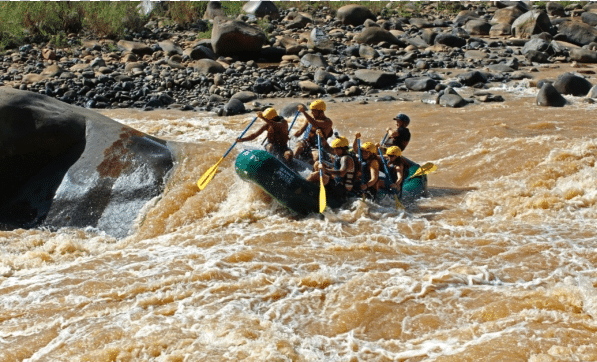
Do You Need a GoPro? A Guide to Filming Your Ocoee Rafting Trip
Whitewater rafting down the Ocoee River is a bucket-list adventure. When you’re dropping into Class IV rapids with water crashing over the bow, you want to remember that rush forever. It is no surprise that many paddlers immediately think about bringing a GoPro.
But navigating 10 miles of relentless whitewater while trying to manage a camera is harder than it sounds. If you are preparing for a trip with Outland Expeditions, you might be wondering if strapping an action camera to your helmet is truly the best way to document the day.
This guide will break down the pros and cons of bringing your own action camera, how to mount it safely if you do, and why you might just want to leave the filming to the professionals.
Capturing the Ultimate Whitewater Experience
The Ocoee River is not your average lazy river float. It is a fast, powerful, and technically demanding stretch of water. Whether you are running the classic Middle Ocoee or taking on the Full Ocoee River Experience, you are in for a serious ride.
Why Do People Want to Film Their Rafting Trips?
When you tackle rapids with names like Table Saw, Hell’s Hole, and Godzilla, you want proof. Video footage captures the real-time adrenaline, the shouts of your crew, and the sheer wall of water crashing over the raft. It allows you to share the thrill with friends and family who couldn’t make the trip to Tennessee.
A GoPro provides a highly immersive, first-person point of view. When you watch the footage later, the wide-angle lens makes you feel like you are right back in the Cherokee National Forest, gripping your paddle and digging into the current.
Does a GoPro Distract You From the Adventure?
Yes, it certainly can. One of the greatest benefits of outdoor adventure is being fully present in the moment. When you are hyper-focused on whether your camera is recording, if the lens is fogged, or if the mount is coming loose, you are no longer focused on the river.
Whitewater rafting requires active participation. Your guide will call out paddle commands that you must follow instantly to safely navigate the rapids. If you are fiddling with a camera battery instead of paddling, you compromise the experience for everyone in the raft.
Essential Gear and Mounting Strategies
If you decide to bring your GoPro, you need to ensure it is completely secure. The Ocoee River claims hundreds of sunglasses, hats, and action cameras every single season. Once something sinks to the bottom of the riverbed, it is gone for good.
How Should I Mount My GoPro for Whitewater Rafting?
Your two best options are a helmet mount or a chest mount.
Helmet Mount: This is the most popular choice. It provides a true point-of-view perspective and keeps the camera high above the water splashes. If you use a helmet mount, ensure it is a high-quality, curved adhesive mount designed for vented helmets. Note: Always check with your guides at Outland Expeditions before adhering anything to their rental helmets.
Chest Mount: A chest harness provides a stable, immersive angle that captures your arms and paddle in the frame. However, because it sits lower on your body, the lens will get submerged and splashed far more often. You will need to wipe the lens constantly to avoid blurry footage.
Do not bring a head strap (it will be ripped off by the first wave) or a selfie stick (you need both hands to paddle).
What Accessories Are Mandatory for River Trips?
You absolutely need a floatation accessory. A “Floaty” is a bright orange sponge-like case that wraps around your GoPro. If your mount breaks and the camera goes overboard, the Floaty ensures it bobs to the surface where it can be retrieved. Without it, the camera will sink like a stone.
Additionally, use a tether system. Tie a small piece of paracord from the camera housing to a secure point on your helmet or life jacket. Redundancy is the key to keeping your expensive electronics safe on Class IV rapids.
The Professional Photography Alternative
You don’t actually need to bring a camera to get incredible photos of your trip. In fact, relying on professional photographers is often the smartest choice for both first-timers and seasoned paddlers.
Why Should I Leave the Filming to the Outfitter?
When you book a trip with Outland Expeditions, professional trip photos are taken from the riverbanks at the most dramatic rapids. These photographers know exactly where the raft will drop, where the water will splash the highest, and when to snap the shutter to get everyone’s faces.
A GoPro only captures what is directly in front of you. A professional shore photographer captures the entire raft, the sheer scale of the rapid, and your reaction all in one frame. Plus, by leaving your camera in the car, you can focus 100% on the teamwork, the scenery, and the pure fun of the river.
The Full Ocoee River Experience
If you are planning to bring a camera, you want to make sure you are capturing the best water Tennessee has to offer. For that, you need to run the entire river.
What is the Full Ocoee River Experience?
The Full Ocoee River Experience is the ultimate whitewater day. Outland Expeditions combines the Upper Ocoee—the legendary 1996 Olympic course—with the classic Middle Ocoee. This gives you 10 miles of river and over 20 named rapids in a single, six-hour day.
You will start the morning navigating the tight, technical drops of the Olympic section. Afterward, Outland provides a massive riverside lunch to help you refuel. Then, you jump right back in to tackle the relentless waves of the Middle Ocoee. It is the benchmark adventure for the region, and it provides endless opportunities for incredible footage.
Final Verdict on Action Cameras
So, do you really need a GoPro? It ultimately depends on your priorities.
If you are a tech-savvy adventurer who already owns the right mounts, tethers, and floaties, bringing your action camera can yield some awesome first-person memories. Just be sure to mount it securely, hit record at the start of the trip, and then completely forget about it.
However, if you don’t already own one, do not feel pressured to buy an expensive camera just for this trip. The professional photos available after your run will capture the sheer size of the rapids far better than a helmet cam ever could. Sometimes, the best way to experience the Ocoee River is completely unplugged.
Are you ready to tackle Tennessee’s most legendary whitewater? Whether you bring a camera or just your sense of adventure, the rapids are waiting. Contact Outland Expeditions today to reserve your spot on the river!
Frequently Asked Questions
Can I hold my phone or camera while rafting?
No, you must have both hands free to hold your paddle and brace yourself in the raft. Any camera you bring must be securely mounted to a helmet or chest harness.
Will my GoPro sink if it falls in the river?
Yes, action cameras do not float on their own. You must attach a specialized floatation device (like a “Floaty”) if you want any chance of retrieving it after a drop.
Are professional photos included in the trip price?
Professional trip photos are not included in the base ticket price but are available for purchase after your trip concludes at the Outland Expeditions outpost.
Does Outland Expeditions rent GoPros or action cameras?
No, Outland Expeditions does not currently rent action cameras. You will need to bring your own equipment and the necessary secure mounts.
What happens if I lose my camera in the river?
If an item is lost in the Ocoee River, it is almost impossible to recover due to the fast currents and deep, rocky channels. Bring personal electronics at your own risk.
Can I wear a head strap mount for my camera?
Head strap mounts are highly discouraged. The force of Class III and IV rapids will easily rip a non-adhesive strap right off your head.


Leave a Reply
Want to join the discussion?Feel free to contribute!