
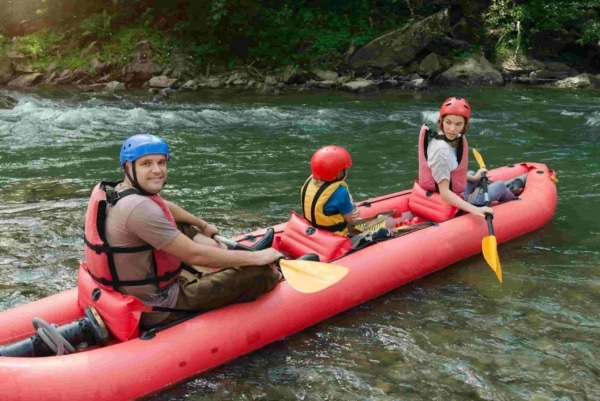
How Whitewater Rafting Safety Gear Protects You on the River
Staring down a churning, foaming Class IV rapid like Table Saw or Humongous on the Ocoee River is an exhilarating experience. The roar of the water rushing through the Cherokee National Forest gorge is enough to get anyone’s adrenaline pumping. While the thrill is what brings thousands of rafters to East Tennessee every year, it is the specialized equipment that ensures everyone returns safely to the outpost.
Many first-time paddlers look at a personal flotation device (PFD) and a whitewater helmet as standard outdoor clothing. However, this gear consists of highly engineered safety equipment built to withstand extreme hydrologic forces. Understanding the science and design behind how life jackets, helmets, and safety gear protect you transforms how you view your equipment.
In this comprehensive guide, you will learn about the physics of whitewater safety gear, how it acts as your personal shield on the river, and why premium gear is non-negotiable for a world-class river run.
Why Do Standard Life Jackets Fail in Whitewater Rapids?
A common misconception is that any standard life jacket will suffice for a trip down a major river like the Ocoee. Recreational life jackets designed for calm lake boating or fishing are completely inadequate for Class III and Class IV whitewater. When you drop into a high-volume rapid, the water is heavily aerated, meaning it is mixed with a massive volume of air bubbles.
Aerated water is significantly less dense than flat water. Because the water density is lower, your body naturally sinks much lower in a rapid than it would in a swimming pool or a calm lake. Standard life jackets do not possess the necessary buoyancy rating to keep an adult’s head completely clear of aerated foam.
To counteract this phenomenon, Outland Expeditions provides every rafter with premium, Coast Guard-approved Type V commercial PFDs. These specialized life jackets are engineered with exceptionally high flotation ratings, packed with extra foam distributed to flip an swimmer onto their back. They ensure that even in the middle of a bubbly, churning hydraulic, your airway remains well above the water line.
How Do Whitewater Helmets Prevent Serious Head Injuries?
The geology of the Ocoee River is defined by stunning granite gorges, shelves, and boulder fields. While these natural formations create iconic drops like Diamond Splitter and Edge of the World, they also mean that the riverbed is lined with hard, stationary obstacles. If a rafter exits the boat and goes for an unexpected swim, the primary hazard is not just the water, but the rocks beneath it.
Whitewater helmets are vastly different from bicycle or skateboard helmets. They are specifically built with an outer shell made of impact-resistant ABS plastic or polycarbonate polymers that can take repeated impacts without cracking. Beneath the hard shell lies a layer of specialized, water-resistant foam designed to absorb and dissipate the kinetic energy of a high-velocity strike against a rock.
Furthermore, these helmets feature specialized ear protection and a design that shields the forehead and temple regions. The chin straps are heavily reinforced to ensure the helmet cannot be ripped off your head by the immense drag of a fast-moving current. When you wear a properly fitted whitewater helmet, you are completely insulated from the hard structural elements of the river corridor.
What Structural Roles Do Secondary Safety Gear Elements Play?
While PFDs and helmets are the most visible layers of defense, several other pieces of equipment play vital roles in keeping you safe on a six-hour trek like the Full Ocoee River Experience. Every piece of gear provided or recommended has a specific protective purpose based on real-world river physics.
- T-Grip Paddles: The paddles provided by Outland Expeditions feature an ergonomic T-grip handle. This design prevents the paddle from slipping out of your hands, reducing the risk of accidentally hitting a fellow rafter in the face during a bumpy rapid.
- Thermal Wetsuits: When air or water temperatures drop, especially during early spring or cool mornings, Outland Expeditions provides professional wetsuits. These suits trap a thin layer of water against your skin, which your body warms up to insulate you against hypothermia and cold-water shock.
- Heel-Strap Footwear: Rafters are required to wear secure shoes or old sneakers with heel straps—never flip-flops. Secure footwear protects your feet from sharp rocks on the riverbed if you need to walk, and prevents the river from pulling your shoes off.
How Do Certified River Guides Maximize Gear Effectiveness?
Even the most advanced safety gear in the world is only as effective as the team deploying it. Safety on a high-adrenaline river is a continuous system that blends high-quality equipment with elite human expertise. This is why having a professionally trained, certified guide in every single raft is a foundational rule of our operations.
Every guide at Outland Expeditions is fully certified in Swiftwater Rescue and trained in advanced first aid. Before your raft ever touches the water, your guide personally inspects and adjusts your PFD and helmet to guarantee a perfect, secure fit. A loose life jacket can ride up over your face in the water, rendering its buoyancy useless; a loose helmet can shift and expose your head to impact.
On the river, your guide acts as the captain, navigating technical channels, predicting hydraulic movements, and giving clear paddle commands to keep the boat stable. If a rafter does fall into the water, the guide relies on integrated safety tools, such as heavy-duty throw bags containing high-tensile rescue ropes, to swiftly pull swimmers back to safety.
What Are the Key Takeaways for Staying Safe on the Ocoee River?
When you embark on an outdoor adventure, safety should always be a collective effort between the outfitter and the participant. By respecting the power of the river and trusting the engineering behind your safety gear, you can focus entirely on the fun and excitement of the rapids.
Always remember that premium safety equipment is non-negotiable for Class III and Class IV rapids. Ensure your gear is tight, fitted, and checked by a professional before stepping off the river bank. Finally, always listen to your guide’s safety briefing and paddle instructions, as they are your ultimate resource for navigating the water safely.
Are you ready to experience the ultimate whitewater rush with the peace of mind that comes from top-tier safety gear and expert guiding? Contact Outland Expeditions today to book your next legendary adventure on the Ocoee River.
Frequently Asked Questions (FAQs)
Does the Full Ocoee Experience require prior rafting experience?
No prior rafting experience is required to participate in the Full Ocoee River Experience. Our certified guides provide a comprehensive safety and paddle-stroke briefing before launching into each section of the river. Participants should be comfortable swimmers, in reasonable physical condition, and at least 12 years of age or older.
What makes the Upper Ocoee different from the Middle Ocoee?
The Upper Ocoee is a shorter, technically intense run through the narrow 1996 Olympic whitewater course featuring sharp drops and rapid-fire hydraulics. The Middle Ocoee is a longer, five-mile stretch featuring big-volume Class III and IV rapids with wider pools between drops. Booking the full river day allows you to experience both unique personalities of the river back-to-back.
When is the Full Ocoee Experience trip offered?
The Full Ocoee River Experience is offered on Saturdays and Sundays from June through August. This specific trip is restricted to weekends because it relies directly on the dam-controlled water release schedule managed for the Upper Ocoee section. Trips depart the outpost at 9:00 AM and return around 3:00 PM.
Is the riverside lunch included in the trip price?
Yes, a full riverside lunch is completely included in the price of the Full Ocoee River Experience. The meal is served during the midday break directly between the morning Upper Ocoee run and the afternoon Middle Ocoee run. It provides a perfect opportunity to dry off, rest, and refuel for the second half of your trip.
How do we get between the Upper and Middle Ocoee sections?
Outland Expeditions handles all shuttle transportation and logistics between the different river sections. Rafters do not need to move their personal vehicles during the day. Our team transports you and all necessary gear seamlessly from the outpost to each launch and pickup point.
Can we book the Full Ocoee for a private group or corporate event?
Yes, Outland Expeditions regularly hosts corporate team-building events, private parties, school groups, and family reunions. The shared challenges and communication required on the river make it an exceptional team-building activity. Groups can call our team directly at 1-800-827-1442 to arrange custom scheduling and group pricing options.
What happens if there is bad weather on our trip day?
Whitewater rafting trips run as scheduled in light or steady rain, as you are going to get completely wet on the river regardless of the weather. Trips are only delayed or canceled in the event of severe weather like lightning, regional flooding, or unexpected adjustments to the dam water releases. In the rare event of a cancellation, we will work with you to reschedule or provide a refund.


Leave a Reply
Want to join the discussion?Feel free to contribute!