
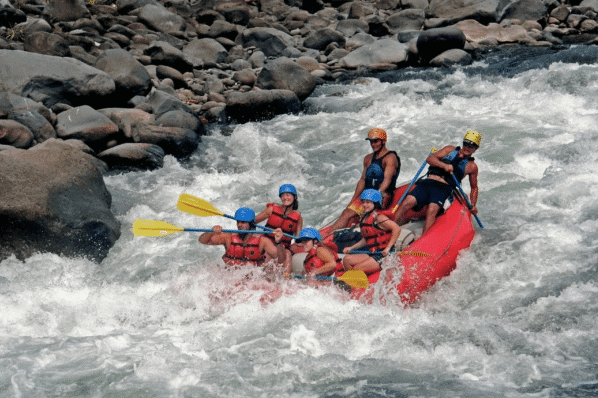
What Class IV Whitewater Actually Means
The International Scale of River Difficulty classifies rapids from Class I (easiest) to Class VI (unrunnable). Class IV sits near the upper end of the commercial rafting spectrum. Class IV rapids include intense, powerful but predictable water. Waves can reach several feet, hydraulics (keeper holes) may flip rafts if misnavigated, and routes through rapids require precise maneuvering. Water moves fast, features appear quickly, and passengers must follow guide instructions without hesitation. However, Class IV does not mean the same thing on every river. A Class IV rapid on a warm, pool-drop river in summer presents far less risk than a Class IV rapid on a cold, continuous mountain river in spring runoff. This is why river-specific context matters more than the classification alone.Why Some Class IV Rivers Work for First-Time Rafters
Certain Class IV rivers allow beginners to participate safely because of trip design and environmental conditions. The Ocoee River in Tennessee is a clear example. The Middle Ocoee combines Class III and IV whitewater with continuous action, warm summer water temperatures, and a relatively short trip length. Guided trips on this section serve first-time rafters because:- Rapids appear in quick succession, but guides know the lines through each feature.
- Water is warm enough that a swim does not create hypothermia risk.
- The river flows through a controlled release schedule, meaning water levels stay within a predictable range.
- Professional outfitters provide safety briefings, helmets, life jackets, and paddle instruction before launching.
What Makes Class IV Rapids More Dangerous
Specific features increase risk on Class IV rivers: Cold Water: Rivers fed by snowmelt or glacial sources drop body temperature quickly after a swim. Cold water shock and loss of muscle control happen within minutes. Beginners on cold rivers face higher consequences if they fall out. Continuous Rapids: Rivers where rapids appear back-to-back without calm pools between features do not give swimmers time to be pulled back into the raft. Continuous whitewater demands higher stamina and composure from paddlers. High Water Volume: Spring runoff or dam releases can push rapids into higher difficulty. Higher water creates stronger hydraulics and less time to react. Rivers rated Class IV at normal flows can become Class V during peak runoff. Remote Access: Rivers in wilderness areas extend rescue response time. If an injury occurs miles from the nearest road, evacuation becomes complex. Beginner trips should prioritize rivers with road access along the corridor. Undercut Rocks and Strainers: These hazards trap swimmers underwater. Rivers with abundant undercuts or fallen trees present added risk. Guided trips on beginner-appropriate rivers avoid sections with known entrapment hazards. Rivers without these compounding factors offer a manageable introduction to Class IV whitewater. Rivers with several of these factors do not.How Guided Trips Reduce Risk for Beginners
Professional rafting outfitters mitigate Class IV risk through equipment, training, and river knowledge. Guides scout rapids before trips or memorize features through hundreds of runs. They know which line avoids the worst hydraulics, where to position the raft to miss rocks, and how to read water levels on any given day. Before launching, guides provide safety talks covering:- How to hold the paddle and respond to commands
- What to do if you fall out (float on your back, feet downstream, wait for a throw rope or swimmer rescue)
- How to get back in the raft mid-river
- Hand signals used during loud rapids
Age, Fitness, and Swimming Requirements
Outfitters set minimum age limits based on river difficulty and liability standards. For Class IV rivers, most require participants to be at least 12 years old. Some set the limit at 14 or 16 depending on state regulations and river characteristics. Age requirements exist because younger children may lack:- Upper body strength to hold on during turbulent water
- Cognitive ability to process and execute rapid commands under stress
- Emotional readiness to stay calm if they fall out