
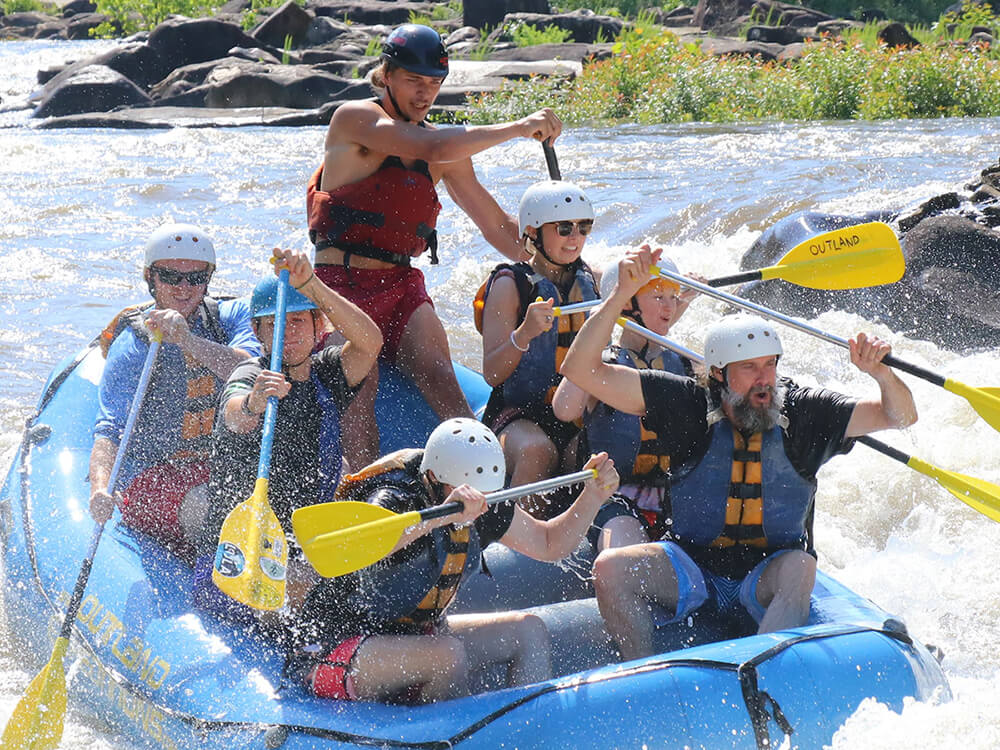
5 Mistakes First-Time Rafters Make (and How Outland Helps Avoid Them)
The Ocoee River is a beast. It is a beautiful, roaring, adrenaline-pumping beast that winds through the Cherokee National Forest, offering some of the most consistent and exciting whitewater in the United States. For the uninitiated, standing on the banks and watching the water churn through rapids like “Hell’s Hole” or “Grumpy” can be equal parts exhilarating and terrifying.
If you are reading this, you are likely preparing for your very first whitewater rafting trip. Congratulations! You are about to embark on an adventure that will leave you with stories for a lifetime. However, like any adventure sport, there is a learning curve. The river is wild, and while it doesn’t require you to be an Olympic athlete, it does demand respect.
Every season, we see enthusiastic first-timers make the same few errors. Some of these mistakes result in a bit of discomfort (like a sunburn in a weird spot), while others can turn a thrilling day into a stressful one. The good news? You don’t have to learn the hard way.
At Outland Expeditions, we have guided thousands of guests down the Ocoee. We have seen it all, and we have refined our process to ensure that even if you make a rookie slip-up, we are there to catch you—sometimes literally. Here are the five biggest mistakes first-time rafters make, and exactly how our team ensures they don’t ruin your ride.
1. Are You Wearing the “Cotton Death Trap” or Flimsy Footwear?
This is, without a doubt, the most common error we see at the outpost. You wake up, check the weather, see it’s a sunny 85 degrees, and throw on a cotton t-shirt and a pair of flip-flops. It makes sense for the beach, so why not the river?
Here is the reality: Cotton is the enemy of the rafter. When cotton gets wet, it stays wet. It clings to your skin, sucks the heat right out of your body, and becomes heavy. Even on a warm day, the Ocoee River water can be brisk. As you splash through rapid after rapid, that wet cotton shirt will leave you shivering uncontrollably by mile three. This condition, often called “the shivers,” drains your energy and makes it hard to paddle effectively.
Then there are the shoes. Flip-flops, Crocs with the strap up, or loose sandals are almost guaranteed to be claimed by the river gods. We have a saying: “If you love it, don’t wear it loose.” Losing a shoe means walking on jagged river rocks or hiking out of the gorge barefoot—neither of which is a pleasant experience.
How Does Outland Expeditions Solve This?
We don’t let you hit the water unprepared. Before you ever step foot in a raft, our reservation staff and on-site team provide a comprehensive packing list. We emphasize synthetics—materials like polyester, fleece, or specialized wool that dry quickly and keep you warm even when wet.
Furthermore, we enforce a strict footwear policy. If you show up in flip-flops, we will stop you. We require shoes with a secure heel strap that will stay on your feet even if you go for a swim. If you forgot your gear, our outpost shop is stocked with river-appropriate footwear and apparel. We act as your final line of defense against a wardrobe malfunction that could freeze the fun out of your trip.
2. Did You Forget That the Sun Reflects Off the Water?
You applied sunscreen in the parking lot. You feel responsible. You are ready to go. But two hours later, you are wondering why your thighs feel like they are on fire and the tops of your feet are turning a bright, angry crimson.
First-time rafters often underestimate the power of the sun on the river. It’s not just the sun beating down on you from the sky; it is the UV rays reflecting off the churning white water, hitting you from below. Areas that are normally shaded, like under your chin or inside your nose, can get burned. But the biggest victims? The “rafter’s gap”—that space between your shorts and your life jacket, and the tops of your knees.
Because the water is cool and you are constantly getting splashed, you don’t feel the burn happening. You might not realize the damage until you are back at the outpost changing clothes, and by then, your skin is radiating heat.
How Does Outland Expeditions Solve This?
We build breaks and checks into our full river trips. If you are joining us for the Full Ocoee River Experience, which includes a riverside lunch, that downtime is the perfect reminder to reapply.
Our guides are also vigilant. They spend their lives on the water and know exactly what “lobster skin” looks like. They will often remind the crew to cover up or reapply sunscreen during calm stretches of water. Additionally, the helmets we provide offer some shade for your face, and our high-quality Personal Flotation Devices (PFDs) cover a good portion of your torso. We encourage wearing quick-dry long sleeves and pants for those with sensitive skin—blocking the sun is always more effective than cream alone.
3. Are You Listening to Your Guide or Your Ego?
Whitewater rafting is a team sport, but it is not a democracy. There is a captain on the boat, and that is your guide. One of the most dangerous mistakes a rookie can make is “tuning out” during the safety briefing or ignoring commands on the water.
Sometimes this comes from overconfidence. Maybe you’ve kayaked on a lake before, or you’re a strong swimmer. You might think, “I know how water works.” But the Ocoee is a Class III and IV river. The currents here are powerful, and the hydraulic features—like holes and waves—require precise timing to navigate.
When a guide yells “All Forward!” or “Left Back!”, they aren’t making suggestions. They are trying to position the boat to hit a wave squarely so you don’t flip. A delay of two seconds because you were chatting with your buddy or fixing your hair can be the difference between a smooth ride and a “dumptruck” (where the boat tips everyone out).
How Does Outland Expeditions Solve This?
Our guides are the elite of the elite. We don’t just hire anyone with a pulse; we hire experienced, certified professionals who know every rock and eddy on the Ocoee. They undergo rigorous training not just in paddling, but in crowd control and psychology.
Before the raft even touches the water, we conduct a mandatory, detailed safety briefing. We teach you the commands, we show you how to sit, and we explain why it matters. On the water, our guides command respect. They are loud, clear, and decisive. They create an environment where you want to listen because you trust their expertise. If you space out, they will bring you back to reality quickly, ensuring the safety of the entire boat.
4. Are You Paralyzed by the Fear of Falling In?
On the opposite end of the spectrum from the overconfident rafter is the terrified one. This is the person who is so afraid of falling out of the boat that they forget to paddle. They grip the safety ropes with white knuckles, stiffen their body, and stop listening to commands.
Paradoxically, not paddling is one of the quickest ways to fall out. A paddle in the water acts as a tripod; it gives you a third point of balance. When you are paddling hard, you are locked into the boat. When you freeze up and pull your paddle in, you become top-heavy and unstable.
Fear of the “swim” is natural. The water looks chaotic. But freezing up endangers the whole crew because the boat loses momentum and steerage.
How Does Outland Expeditions Solve This?
We normalize the swim. First, we equip you with top-tier Type V Personal Flotation Devices (PFDs) designed specifically for high-buoyancy whitewater. You will float.
Secondly, our guides are experts at calming nerves. They start the trip with easier rapids to build your confidence. If you do fall in, it’s not a disaster—it’s part of the adventure. Our guides are trained in swift water rescue. They know exactly how to scoop you back into the boat by the shoulders of your PFD often before you even realize you’re fully wet. We turn the fear of the unknown into a manageable, and often hilarious, part of the story.
5. Do You Think You Need Olympic Skills to Raft the Ocoee?
The Ocoee River was the site of the 1996 Olympic Canoe and Kayak slalom competition. That fact scares a lot of people away. They assume that because Olympians raced here, the river is too advanced for a beginner. They think, “I need to be an athlete to do this,” or “I need to have rafted before.”
This mistake is a mental barrier that prevents people from ever booking the trip. They miss out on the Middle Ocoee or the Upper Ocoee because they assume they aren’t “qualified.”
How Does Outland Expeditions Solve This?
We make the Olympic river accessible to everyone aged 12 and up. You do not need experience. You do not need to be a gold medalist. You just need a pulse and a willingness to paddle.
Outland Expeditions handles the technical skill. Your guide is the one reading the water and steering the boat. You are the engine. If you can hold a paddle and follow basic instructions, you can raft the Ocoee. We have taken grandparents, teenagers, corporate teams, and bachelor parties down this river. By using self-bailing rafts and expert navigation, we transform a world-class whitewater course into a fun, accessible playground for the average person.
Conclusion: Adventure Awaits, Mistake-Free
Rafting the Ocoee River is a bucket-list experience that you shouldn’t miss just because you’re nervous about the details. Yes, first-timers make mistakes—they wear cotton, they get sunburned, and they sometimes freeze up in a rapid. But that is exactly why you book with a professional outfitter.
Outland Expeditions exists to absorb those mistakes and turn them into memories. We provide the gear that keeps you safe, the guides that keep you on course, and the knowledge that keeps you comfortable. All you have to do is show up, listen, and paddle.
Don’t let the fear of the unknown keep you on dry land. The rapids are calling, and we have a seat saved for you.
Ready to get your feet wet? Contact Outland Expeditions Today to book your Ocoee River adventure!
Frequently Asked Questions (FAQ)
What should I wear for my first rafting trip on the Ocoee?
You should wear quick-drying synthetic clothing, such as a bathing suit, nylon shorts, and a polyester or fleece top. Avoid cotton at all costs, as it stays cold and heavy when wet. For footwear, you must wear shoes that stay securely on your feet, such as old tennis shoes, water shoes, or sandals with a heel strap (like Tevas or Chacos). Flip-flops are not allowed.
Is whitewater rafting on the Ocoee River safe for beginners?
Yes! While the Ocoee River features Class III and IV rapids, it is very popular for first-time rafters. You do not need prior experience. Outland Expeditions provides a professional guide for every boat, along with all necessary safety equipment, including a helmet and a high-flotation life jacket (PFD).
Do I need to know how to swim to go rafting?
While knowing how to swim is a plus, it is not a strict requirement for rafting with Outland Expeditions. Your Personal Flotation Device (PFD) is designed to keep you afloat even in turbulent water. However, you should be comfortable being in the water and must be able to follow your guide’s instructions in the event you fall out of the raft.
How old do you have to be to raft the Ocoee with Outland Expeditions?
The minimum age requirement for rafting the Ocoee River is 12 years old. This is a Tennessee State Parks regulation for the Ocoee and is strictly enforced for safety reasons.
What happens if I fall out of the raft?
Falling out, or “taking a swim,” is a possibility on any rafting trip. If it happens, try to stay calm. Your life jacket will bring you to the surface. Your guide is trained to retrieve you quickly, and you will be briefed on “whitewater swimming position” (feet up, pointing downstream) before the trip begins to protect you from underwater rocks.


Leave a Reply
Want to join the discussion?Feel free to contribute!