
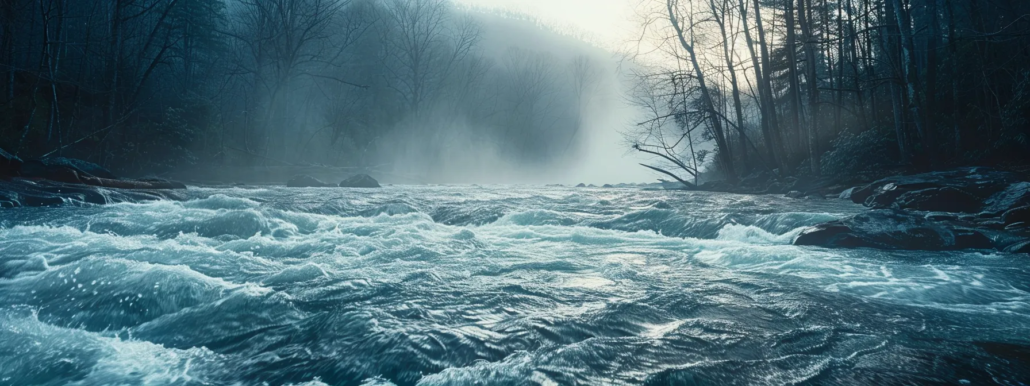
The Most Underrated Rapids on the Ocoee: Beyond the Big Names
Whitewater rafting on the Ocoee River is world-famous for a reason. Names like Grumpy’s, Broken Nose, and Hell’s Hole are whispered with a mix of reverence and nervous excitement in gear shops and parking lots across Tennessee. These Class IV giants are the headliners, the rock stars of the river that end up on the t-shirts and the highlight reels.
But if you ask a veteran river guide what their favorite part of the river is, you might get a surprising answer. It’s rarely the biggest drop. Often, it’s the technical, splashy, playful stretches in between the chaos—the underrated rapids that offer endless surfing, perfectly timed spins, and non-stop laughter.
At Outland Expeditions, we believe the full Ocoee experience isn’t just about surviving the big drops; it’s about thriving in the continuous whitewater mile after mile. Today, we are shining a spotlight on the unsung heroes of the Ocoee River. These are the rapids that might not be on the poster, but they are absolutely the soul of the trip.
Why Do We Focus Only on the Class IV Drops?
It is human nature to focus on the biggest, loudest thing in the room. When you look at a river map, your eyes naturally drift to the “Class IV” markers. These rapids are intense, requiring high adrenaline and serious teamwork. They are the spikes in the heart rate monitor.
However, the Ocoee River is unique because of its density. In a five-mile stretch of the Middle Ocoee, there are over 20 named rapids. If you only focus on the five “famous” ones, you are missing 75% of the river!
The sections between the big drops are where the real magic happens. This is where you learn to read the water, where the boat glides with rhythm, and where you get soaked by a “sleeper” wave you never saw coming. These underrated rapids are technical masterpieces that allow our guides to show off the boat’s agility—turning a standard forward-paddle run into a choreographed dance with the river.
What Makes Moon Chute the Ultimate hidden Gem?
If you blink, you might miss the setup for Moon Chute, but you will definitely feel the result. Located just downstream of the frenetic Slice & Dice, Moon Chute is a classic example of a rapid that looks deceptively simple from the bank but offers world-class fun in the boat.
The river narrows here, forcing the water through a chute that banks hard off a rock wall. For a skilled guide, this isn’t just a passageway; it is a playground.
- The Move: Guides often set the raft up for a “spin,” utilizing the differential current to whip the boat around 360 degrees.
- The Experience: One moment you are facing downstream, and the next, the world is spinning, the sky is blurring with the trees, and everyone in the boat is laughing hysterically.
- Why It’s Underrated: It lacks a massive vertical drop, so it doesn’t look scary. But the G-force of a perfect spin in Moon Chute is a sensation you won’t find anywhere else on the river.
Is Double Trouble the Most Photogenic Rapid on the River?
You might think the best photos come from the biggest waterfalls. You would be wrong. Double Trouble serves up exactly what its name implies: two (and sometimes three) perfectly formed, massive standing waves stacked back-to-back.
Unlike technical rock gardens where the boat might get stuck, Double Trouble is a “wave train.” This means deep, fast-moving water rushing over a smooth riverbed, creating undulating walls of water.
- The Splash Factor: 10/10. Because the waves are rhythmic, the raft often punches through the first one, launching the bow in the air, only to slam down just as the second wave crashes over the entire crew.
- The Photo Op: Professional photographers love this spot. The lighting is usually open, and the symmetry of the waves makes for an epic action shot where you can see every single water droplet.
- Why It’s Underrated: It is officially a Class III rapid. On paper, it is “easier” than Broken Nose. In reality, it is often the wettest rapid on the Middle Ocoee.
Why Do Guides Love Surfing at Flipper?
Flipper sounds like a friendly dolphin, but on the Ocoee, it’s a rapid with a cheeky personality. Located after the tight maneuvering of Squeeze Play, Flipper features a series of ledges and holes that create a hydraulic phenomenon known as a “surf wave.”
In most rapids, the goal is to get down the river. At Flipper, the goal is often to stay put.
- The Surf: If time and traffic allow, your Outland Expeditions guide might nose the raft into the hydraulic. The upstream current catches the boat, holding it in place while the river rushes underneath you.
- The “Face Wash”: While surfing, the water piles up on the upstream side of the raft. If you are sitting in the front, get ready for a continuous blast of refreshing mountain water right in the face.
- The Name: Why is it called Flipper? Because if you surf it a little too aggressively, or if the weight shifts the wrong way, the river might decide to flip the raft. Don’t worry—it’s a deep, safe pool below!
How Does Diamond Splitter Test Your Technical Skills?
Just before you reach the chaotic end of the Middle Ocoee, you encounter Diamond Splitter. This rapid is a masterclass in geology and hydrology. A massive, diamond-shaped rock island splits the current in two.
- The Left Line (Witch’s Hole): To the left of the island lies the Witch’s Hole. It is a funky, swirling eddy that loves to trap boats and hold them there for a while. We generally try to avoid the Witch—unless she invites us in!
- The Right Line (The Gem): The standard line is a tight, technical move to the right. It requires precise paddling commands. “All Ahead!” followed immediately by a “Left Back!” to thread the needle between the island and the bank.
- Why It’s Underrated: It requires finesse rather than brute force. It is a mental puzzle for the guide and a trust exercise for the crew. When you nail the line perfectly, it feels smooth as silk.
What About the Upper Ocoee? The “Roach Motel” Factor.
If you are lucky enough to join us for a Full River Trip (which combines the Upper and Middle sections), you’ll encounter the Olympic course. Everyone talks about Godzilla and Humongous. But the real sleeper hit of the Upper Ocoee is Roach Motel.
Located near the end of the Olympic section, this rapid is messy. It’s cluttered with rocks, filled with eddies, and the current moves in unpredictable zig-zags.
- The Name: “Roach Motel”—because you can check in, but it’s hard to check out! If you miss your line, you end up stuck in an eddy, watching other boats float by while you work to get back in the flow.
- The Challenge: It isn’t about big waves; it’s about precision. It is a rapid that demands 100% focus from the paddle crew. It’s arguably more technical than Godzilla, even if the waves aren’t as tall.
Why Continuous Action Matters More Than Big Drops
The beauty of the Ocoee River—and why it is consistently ranked as one of the best commercial rafting rivers in the country—is the lack of “flat water.” On many rivers, you hit a big rapid and then float for 20 minutes. On the Ocoee, specifically the Middle section, the action is non-stop.
Rapids like Dixie Drive, Torpedos, and Cat’s Pajamas connect the major landmarks. They keep the energy high. There is no time to get cold, no time to get bored, and no time to check your watch. It is a singular, immersive experience of nature and adrenaline.
When you book a trip with Outland Expeditions, you aren’t just paying for the three or four famous drops. You are signing up for five miles of relentless fun. You are signing up for the spins in Moon Chute, the face-shots in Double Trouble, and the technical satisfaction of Diamond Splitter.
Ready to Experience the “Hidden” Ocoee?
Whether you are a first-timer nervous about the Class IVs or a veteran rafter looking to appreciate the river’s subtleties, the Ocoee has something for you. Our guides are experts at uncovering these hidden moments and making every mile of the river memorable.
Don’t let the summer float by. The water is releasing, the sun is shining, and the “underrated” rapids are waiting to become your new favorites.
Contact Outland Expeditions Today!
Frequently Asked Questions (FAQ)
What makes a rapid “Class III” vs. “Class IV”?
The classification system is based on difficulty and danger. Class III rapids (Intermediate) have moderate, irregular waves that may be difficult to avoid. Complex maneuvers in fast current and good boat control in tight passages are often required. Class IV rapids (Advanced) are intense and powerful but predictable, requiring precise boat handling in turbulent water. On the Ocoee, the difference often comes down to the consequences of a mistake and the size of the waves.
Can beginners raft the Ocoee River?
Absolutely! While the Ocoee is a high-adventure river, no previous experience is necessary. Our trips are fully guided. You will have a professional guide in the back of your raft giving you instructions on when and how to paddle. As long as you are at least 12 years old and in good health, you can conquer both the famous and the underrated rapids of the Ocoee.
Which section of the river is better for “fun” rapids?
The Middle Ocoee is generally considered the most “fun” and playful section because of its continuous nature and wave trains like Double Trouble and Flipper. The Upper Ocoee is steeper and more technical, offering a different kind of challenge. For the ultimate experience, we recommend the Full River Trip, which gives you the best of both worlds.
Do I have to paddle?
Yes! Whitewater rafting on the Ocoee is a team sport. Your guide acts as the captain, steering the raft, but the “motor” is the crew. You will need to paddle to punch through waves, navigate technical shoots like Diamond Splitter, and spin the boat in Moon Chute. It is an active adventure!
What happens if I fall out?
Falling out is a possibility on any rafting trip, especially in playful rapids like Flipper or big water like Double Trouble. If you fall out, try to hold onto the raft. If you are swept away, assume the “whitewater swimming position”: on your back, feet pointing downstream, and toes up on the surface (nose and toes). Your guide and other boats will work quickly to pull you back in. You will be wearing a high-flotation Personal Flotation Device (PFD) and a helmet at all times.


Leave a Reply
Want to join the discussion?Feel free to contribute!