
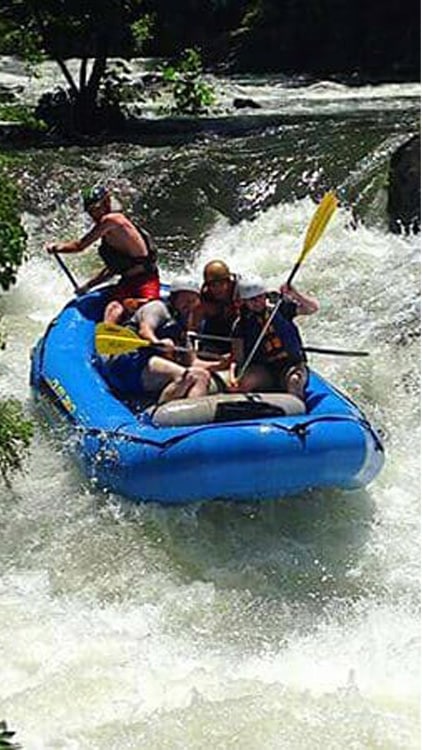
What Are Class III and Class IV Rapids? A Complete Guide to Whitewater Excitement
Imagine the distant roar of churning river water growing louder as your raft approaches a horizon line. Your knuckles tighten on the T-grip of your paddle, the cool mist hits your face, and your guide shouts a confident command: “All forward!”
Within seconds, your crew drops into a towering wave, emerging soaked, laughing, and high-fiving across the boat. This heart-pounding sensation is the hallmark of whitewater rafting, but if you are planning your first adventure, you might be asking yourself: What are Class III and Class IV rapids?
Understanding how river rapids are rated helps you choose the right trip for your thrill tolerance, physical ability, and comfort level. In this guide, we will break down the International Scale of River Difficulty, explore the exact differences between Class III and Class IV whitewater, and explain why Tennessee’s famous Ocoee River is the premier location to experience them firsthand with Outland Expeditions.
What Are Class III and Class IV Rapids in Whitewater Rafting?
Whitewater rivers across the globe are rated using the International Scale of River Difficulty. This standardized system ranges from Class I (flat, slow-moving water) to Class VI (extreme, unrunnable, life-threatening waterfalls).
What are Class III and Class IV rapids within this system? They represent the “Goldilocks zone” of recreational whitewater rafting. They offer powerful hydraulics, towering waves, and genuine adrenaline without requiring years of private kayaking expertise.
When you book a trip with an experienced outfitter like Outland Expeditions, Class III and Class IV rapids deliver big excitement while remaining fully accessible to adventurous beginners ages 12 and up.
What Makes Class III Rapids Ideal for Intermediate Rafters?
Class III rapids are officially classified as “Intermediate” whitewater. They feature moderate, irregular waves that can easily splash over the sides of the raft and wet every paddler on board.
In a Class III rapid, the river current moves at a brisk pace, creating clear passages that require basic boat maneuvering. While the waves look impressive from water level, the river channel is generally wide and forgiving.
Key characteristics of Class III rapids include:
- Irregular Standing Waves: Waves ranging from 2 to 4 feet tall that roll through the channel in splashy, rhythmic sequences.
- Clear Passage Channels: Navigable lines through the water that are easily identifiable by an expert river guide.
- Low Hazard Risk: While falling out of the raft (a “swim”) is possible, self-rescue is usually simple because calm water or gentle eddies wait directly downstream.
- High Fun Factor: Class III water provides a roller-coaster-like sensation that builds paddling confidence and keeps everyone smiling.
Famous Class III rapids on the Middle Ocoee River—such as Grumpy and Broken Nose—give paddlers an immediate wake-up call of refreshing spray while teaching crews how to paddle in sync.
What Makes Class IV Rapids an Advanced Whitewater Challenge?
Class IV rapids step up the intensity significantly and are classified as “Advanced” whitewater. These rapids feature intense, powerful, and turbulent water that demands precise boat handling and disciplined crew coordination.
In a Class IV section, the river narrows, the gradient drops steeply, and the water forces its way over submerged boulders, creating massive hydraulics and recirculating waves known as “holes”.
Key characteristics of Class IV rapids include:
- Powerful Hydraulics: Large standing waves and deep troughs that can stop a raft in its tracks if the crew does not paddle hard.
- Constricted Channels: Narrow chutes where the guide must execute complex S-turns and precise alignment to avoid rocks.
- Mandatory Moves: Critical navigation maneuvers that must be executed at specific moments to stay on course.
- Continuous Turbulence: Long stretches of white foam where rapid-fire waves hit the raft back-to-back.
On the Ocoee River, iconic Class IV features like Table Saw and Hell’s Hole showcase the raw energy of Class IV whitewater. Table Saw presents a long, tooth-like train of crashing waves, while Hell’s Hole pushes rafts through a deep wave trough before shooting them up a wall of water.
How Do Class III and Class IV Rapids Compare Side-by-Side?
Understanding the technical differences between these two difficulty levels helps set expectations for your upcoming river trip. Below is a direct comparison of how Class III and Class IV rapids behave on the water:
Wave Height and Dynamics
- Class III: Waves are moderate, bouncy, and predictable. They splash over the bow to soak paddlers, but rarely threaten the stability of the raft when hit straight-on.
- Class IV: Waves are tall, violent, and explosive. They hit from multiple angles and require heavy paddling momentum to break through without spinning the boat.
Navigational Requirements
- Class III: Paths through the rapid are wide and obvious. Missing a line usually results in getting bumped into a calm spot or spun around safely.
- Class IV: Paths are narrow and technical. Missing a paddle command can cause the boat to stick in a hydraulic hole or bump against river obstacles.
Physical Effort and Teamwork
- Class III: Paddling is fun and active, with plenty of rest pauses between wave trains.
- Class IV: Paddling requires maximum effort and instantaneous obedience to the guide’s commands. Every person in the raft acts as an essential motor.
What Can You Expect on the Ocoee River’s Class III and IV Sections?
Located in Cherokee National Forest, Tennessee’s Ocoee River is widely considered one of the premier whitewater destinations in North America. Because dam releases regulate its flow, the Ocoee offers consistently excellent water levels from spring through autumn.
Outland Expeditions offers three distinct ways to experience these incredible Class III and Class IV rapids:
1. The Middle Ocoee River Trip
The Middle Ocoee is the quintessential 5-mile whitewater run. Featuring continuous Class III and IV rapids spaced closely together, it delivers a non-stop action high that lasts roughly 3 hours. It is the most popular stretch of river in East Tennessee for first-timers, families, and organized groups.
2. The Upper Ocoee River Trip
The Upper Ocoee contains the world-famous 1996 Atlanta Olympic Whitewater Course. Built through a narrow granite gorge, this mile of channel features steep drops, tight technical lines, and world-championship Class IV rapids. It provides a fast, intense trip for adventurers looking for maximum technical challenge.
3. The Full Ocoee River Experience
For those who want it all, the Full Ocoee River Experience combines both the Upper and Middle sections into a single 10-mile, 6-hour expedition. You will tackle over 20 named Class III and IV rapids, enjoy a catered riverside lunch, and experience the full range of the Ocoee’s legendary hydrology.
Are Class III and Class IV Rapids Safe for Beginner Rafters?
Yes! A common myth about whitewater rafting is that Class III and Class IV rapids are reserved only for seasoned athletes or professional paddlers. In reality, thousands of first-time rafters successfully conquer the Ocoee River every single season.
At Outland Expeditions, guest safety and comfort are built into every step of the trip:
- Professional Guide in Every Raft: Every boat is captained by a highly trained, certified river guide sitting at the stern. Your guide reads the water, maneuvers the raft, and gives clear timing commands so your crew functions as one unit.
- Top-Tier Commercial Gear: Guests are fitted with Coast Guard-approved Type V high-flotation Personal Flotation Devices (PFDs) and lightweight protective helmets.
- Comprehensive Safety Briefing: Before setting foot in the river, your guide conducts a thorough land-based orientation explaining paddling strokes, seating posture, and self-rescue techniques.
- Strict Age Requirements: In accordance with Tennessee state guidelines, all rafters on Class III–IV Ocoee River trips must be at least 12 years old.
You do not need prior experience or elite swimming skills to enjoy a guided Class III–IV trip. All you need is an adventurous spirit, a willingness to follow directions, and a passion for outdoor fun!
How Should You Prepare for Your First Class III and IV Whitewater Trip?
To make the most of your adventure on Class III and Class IV rapids, a little preparation goes a long way. Here is how to prepare for a day on the river with Outland Expeditions:
- Wear the Right Clothing: Dress in quick-drying synthetic fabrics, such as polyester or nylon shorts, swimsuits, or rash guards. Avoid cotton, as it retains water and chills your body.
- Secure Your Footwear: Secure, lace-up tennis shoes or water shoes with heel straps are required. Flip-flops and bare feet are strictly prohibited on the river for safety reasons.
- Protect Against the Sun: Apply waterproof sunscreen before setting out, and consider bringing strap retainers if you wear prescription glasses or sunglasses.
- Leave Valuables Secured: Wallets, cell phones, car keys, and jewelry should be left in your locked vehicle or checked securely at the outpost.
- Arrive Ready to Paddle: Hydrate well, eat a good meal, and get ready to engage your core and upper body as you paddle through the waves.
Ready to Master the River? Contact Outland Expeditions Today!
Now that you know what Class III and Class IV rapids are, there is only one step left: experiencing them for yourself! Whether you choose the continuous roller coaster of the Middle Ocoee or double your adventure with the 10-mile Full Ocoee River Experience, Outland Expeditions is ready to give you the trip of a lifetime.
Our outpost in Cleveland, Tennessee features clean changing facilities, hot showers, top-quality gear, and an expert team dedicated to your safety and enjoyment.
Don’t just read about the excitement—be a part of it! Contact Outland Expeditions today or visit our online booking portal to secure your raft for this season. The river is calling!
Frequently Asked Questions (FAQ)
What is the difference between Class III and Class IV rapids?
Class III rapids feature moderate, irregular waves with clear, wide passage channels that are fun and splashy. Class IV rapids are advanced features with intense hydraulics, large standing waves, steep drops, and narrow channels that require precise boat handling and coordinated crew paddling.
Do I need prior rafting experience to paddle Class III or IV rapids?
No, prior experience is not required when rafting with Outland Expeditions. Every raft is led by a professionally trained guide who provides thorough paddling instructions and manages boat navigation throughout the trip.
How old do you have to be to raft Class III and IV rapids on the Ocoee River?
By Tennessee state regulation, all participants on the Ocoee River must be at least 12 years of age. This rule applies to both the Middle Ocoee and Upper Ocoee sections.
Do I need to know how to swim to go whitewater rafting?
While being comfortable in water is helpful, strong swimming skills are not mandatory. All guests wear high-flotation, Coast Guard-approved Type V Personal Flotation Devices (PFDs) designed to keep you buoyant in turbulent whitewater.
What is included in a guided trip with Outland Expeditions?
Outland Expeditions provides all necessary safety gear—including paddles, helmets, and PFDs—along with river transportation to and from the outpost, professional guide service, and access to outpost amenities like warm showers.
What is the best trip option to experience both Class III and IV rapids on the Ocoee?
The Full Ocoee River Experience is the premier choice. It combines both the Upper (Olympic Course) and Middle sections into a 10-mile, 6-hour adventure featuring over 20 named Class III and IV rapids and a riverside lunch.


Leave a Reply
Want to join the discussion?Feel free to contribute!