
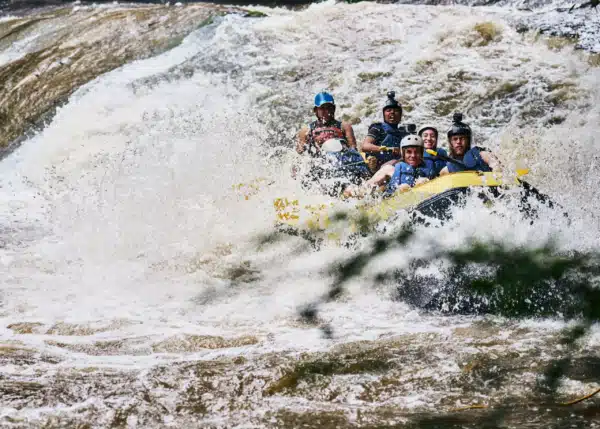
Do You Need to Know How to Swim to Raft the Ocoee?
You don’t need to know how to swim to raft the Ocoee River.
Outland Expeditions provides life jackets for all guests, and guides are trained to assist anyone who falls out of the raft. However, you do need to meet the minimum age requirement of 12 years old, and you should feel comfortable being in moving water while wearing a life vest.
This article explains the actual swimming requirements for Ocoee rafting trips, what safety equipment you’ll use, what happens if you end up in the water, and how to decide if rafting is right for you even if you can’t swim.
What the Ocoee Requires (and What It Doesn’t)
Swimming ability is not listed as a requirement for guided Ocoee rafting trips. The river flows through the Cherokee National Forest and features Class III and IV whitewater, which means rapids are continuous and powerful. Despite this, thousands of non-swimmers raft the Ocoee every year safely.
What matters more than swimming ability is your comfort level in water and your ability to follow guide instructions.
Actual Requirements for Ocoee Rafting
Outland Expeditions requires guests to:
- Be at least 12 years old
- Wear a U.S. Coast Guard-approved life jacket (provided)
- Follow safety instructions from the guide
- Be physically capable of holding onto the raft and pulling yourself back in with assistance
There is no swim test. There is no requirement to demonstrate swimming skills before boarding the raft.
Why Life Jackets Change the Equation
Life jackets keep you buoyant even if you don’t know how to swim. When properly fitted, a life vest will keep your head above water without any effort on your part. This is the primary reason swimming ability is not required.
Guides fit each guest with a life jacket before the trip begins and check that it’s secure. The jacket stays on for the entire duration of the trip, including while you’re in the raft.
What Happens If You Fall Out of the Raft
Falling out of a raft happens occasionally, even on calmer sections of the Ocoee. The river moves fast, and rapids can jolt guests unexpectedly. If you end up in the water, the life jacket and your guide’s training are the two factors that matter most.
Immediate Response
When someone falls out, guides follow a standard protocol:
- The guide calls out instructions to the person in the water
- Other guests are directed to hold onto the raft
- The guide uses a throw rope or paddle to assist the swimmer
- In most cases, the person is pulled back into the raft within 30 seconds to two minutes
What You Experience in the Water
If you fall in, the life jacket will keep you floating. The water is cold (typically 50–65°F depending on season) and moves quickly, but you will stay on the surface.
Guides instruct you to:
- Keep your feet up and pointed downstream (never try to stand in moving water)
- Float on your back with your feet in front of you
- Look for the raft or throw rope
- Grab the rope or paddle when it reaches you
You do not need to swim back to the raft. The guide retrieves you.
How Long You Stay in the Water
Most people who fall out are back in the raft in under a minute. In rare situations where the raft flips or multiple people fall out, rescue can take a few minutes longer. Other rafts on the river and safety kayakers (present on busier days) can also assist.
The key point: you are never left to swim to shore or fend for yourself. Retrieval is part of the guide’s job.
Comfort in Water vs. Swimming Ability
Swimming ability and comfort in water are not the same thing.
Many non-swimmers are perfectly comfortable being in water while wearing a life jacket. Others panic at the idea of being submerged, even briefly, regardless of flotation equipment.
Assessing Your Comfort Level
Before booking an Ocoee rafting trip, ask yourself:
- Have you ever worn a life jacket in a pool, lake, or ocean?
- Can you handle brief submersion (like going underwater in a pool) without panicking?
- Are you comfortable with the idea of being in moving water that you can’t see through?
- Can you stay calm when surprised or jolted?
If you answered yes to most of these, you’ll likely handle an Ocoee rafting trip without issue, even if you can’t swim.
If the idea of falling into fast-moving water causes significant anxiety, rafting may not be the right activity, regardless of life jacket availability.
What “Comfortable in Water” Actually Means
You don’t need to be a strong swimmer, but you do need to be able to:
- Keep your head above water with a life jacket on (this happens automatically, but panic can interfere)
- Follow verbal instructions while in the water
- Reach for and grab a rope or paddle
- Trust the life jacket to keep you floating
These are different skills than swimming laps or treading water.
Middle, Upper, and Full Ocoee: Which Section Is Best for Non-Swimmers?
The Ocoee is divided into three sections: the Middle Ocoee, the Upper Olympic Ocoee, and the Full Ocoee. Each section has different rapid characteristics, trip length, and intensity.
Middle Ocoee
The Middle Ocoee is the most popular option for many guests because it combines exciting rapids with a trip length that works well for day-trippers and first-time rafters. This section offers continuous action with Class III and IV rapids, but the run is shorter (approximately 5 miles) and guides have extensive experience managing this section.
For non-swimmers, the Middle Ocoee is often the best starting point. The rapids are exciting but predictable, and guides know exactly where the biggest waves and drops occur.
Upper Olympic Ocoee
The Upper Olympic Ocoee is known for its technical features and Olympic legacy. This section includes the famous 1996 Olympic whitewater course, which means the rapids are more complex and require more precise maneuvering.
Non-swimmers can absolutely raft the Upper Ocoee, but the increased technicality means a slightly higher chance of falling out during tight maneuvers. Guides are equally trained on this section, and safety protocols are identical.
Full Ocoee
The Full Ocoee combines both sections into one longer day on the water, making it the best choice for guests who want the most complete experience available. This is a premium adventure option that lasts significantly longer (typically 6–8 hours including shuttle time).
For non-swimmers considering the Full Ocoee, the main consideration is endurance rather than swimming ability. You’ll be in the raft and potentially in the water for a longer period, which requires more stamina.
Safety Measures Beyond Life Jackets
Life jackets are the primary safety tool, but Outland Expeditions and other professional outfitters use additional measures to protect guests who can’t swim.
Guide Training and Certification
Guides on the Ocoee are trained in swift-water rescue, which includes techniques for retrieving swimmers, managing capsized rafts, and performing CPR. Most guides hold certifications from organizations like the American Canoe Association (ACA) or equivalent bodies.
Guides are trained to recognize when a guest is struggling in the water and prioritize retrieval based on risk level.
Safety Kayakers on Busy Days
During peak season (typically May through September), safety kayakers often accompany groups of rafts. These kayakers are positioned at strategic points along the river and can quickly reach anyone who falls out.
Safety kayakers carry throw ropes, rescue equipment, and additional flotation devices.
Pre-Trip Safety Briefing
Before launching, guides conduct a safety talk that covers:
- How to fit and adjust your life jacket
- What to do if you fall out
- Hand signals and verbal commands
- How to position yourself in the raft
- What to avoid (like trying to stand in the river)
This briefing is mandatory and takes approximately 10–15 minutes. Guides will not launch until everyone demonstrates understanding of basic safety instructions.
Common Mistakes Non-Swimmers Make
Many first-time rafters who can’t swim make predictable mistakes that increase risk or reduce enjoyment.
Mistake 1: Wearing the Life Jacket Too Loose
A loose life jacket can ride up over your head when you hit the water, which is disorienting and reduces effectiveness. Guides check fit before launch, but guests sometimes loosen straps during the trip because they feel restrictive.
Keep the life jacket snug. It should feel tight across your chest and not move more than an inch or two when pulled upward.
Mistake 2: Trying to Stand in the River
If you fall out, your instinct may be to try to stand up. This is extremely dangerous in moving water. Your foot can get trapped between rocks, and the current can push you underwater.
Always float on your back with feet up and pointed downstream. Never try to stand until you’re in calm, shallow water and a guide tells you it’s safe.
Mistake 3: Panicking and Letting Go of the Raft
Some guests fall partially out of the raft and panic, letting go entirely instead of holding on. If you’re still partially in the raft or holding the rope along the side, stay connected. It’s much easier for the guide and other guests to pull you back in if you’re still attached.
Mistake 4: Not Speaking Up About Fear
If you’re terrified of being in the water, tell your guide before the trip starts. Guides can position you in the center of the raft (the most stable spot) and give you additional coaching. Hiding your fear doesn’t help anyone and can lead to panic if you do fall in.
What About Kids Who Can’t Swim?
Outland Expeditions allows guests ages 12 and older on the Ocoee, and many kids in this age range are non-swimmers or weak swimmers.
Age and Water Comfort
A 12-year-old who can’t swim but is comfortable in water with a life jacket will generally handle the Ocoee better than an adult who panics at the thought of submersion. Age matters less than temperament.
Parents should assess their child’s comfort level honestly. If your child has never worn a life jacket or is afraid of pools, the Ocoee may not be the right first water experience.
Positioning in the Raft
Guides often place younger or less confident guests in the middle of the raft rather than on the outer edges. The middle is the most stable position and the least likely to result in falling out.
Parents can request this positioning during the pre-trip briefing.
Alternatives If You’re Not Ready for the Ocoee
If you’ve decided the Ocoee isn’t the right fit yet, there are ways to build confidence in the water before attempting a Class III/IV rafting trip.
Practice in Calmer Water
Many outfitters offer beginner trips on calmer rivers (Class I or II rapids). These trips let you experience being in a raft, wearing a life jacket, and potentially falling in without the intensity of the Ocoee.
The Hiwassee River, located near the Ocoee, is a popular beginner alternative.
Take a Swimming Lesson (Optional but Helpful)
You don’t need to become an expert swimmer, but a few lessons focused on water comfort and floating can significantly reduce anxiety. Many community pools offer adult beginner lessons.
Visit a Pool with a Life Jacket
If you have access to a pool, practice wearing a life jacket and floating. Jump in, practice floating on your back, and get used to the sensation of being buoyant without effort. This can eliminate much of the fear associated with falling out of a raft.
Final Considerations Before You Book
You don’t need to know how to swim to raft the Ocoee, but you do need to make an honest assessment of your comfort level and physical readiness.
Ask yourself:
- Can I follow instructions from a guide while in the water?
- Am I comfortable with the idea of brief submersion in cold, fast-moving water?
- Can I hold onto a rope or paddle if thrown to me?
- Am I physically capable of pulling myself toward the raft with assistance?
If you answered yes to these questions, swimming ability is irrelevant. The life jacket, guide training, and safety protocols are designed to handle the rest.
If you’re unsure, contact Outland Expeditions and speak with a guide. They can answer specific questions about your situation and help you decide whether the Middle Ocoee, Upper Olympic Ocoee, or Full Ocoee is the right choice.
Thousands of non-swimmers raft the Ocoee every year and leave with one of the most exciting outdoor experiences East Tennessee has to offer.


Leave a Reply
Want to join the discussion?Feel free to contribute!