
How Does the Ocoee River Compare to the Pigeon, Nantahala, and Chattooga Rivers?
If you are planning a summer adventure in the Southeast, you have likely realized that the region is a goldmine for whitewater rafting. From the Great Smoky Mountains to the Blue Ridge, the rivers here are legendary. But not all rivers are created equal.
Choosing the right river can mean the difference between a pulse-pounding, unforgettable memory and a slow, chilly float. At Outland Expeditions, we live and breathe the Ocoee River, but we know you have options. To help you decide where to dip your paddle, we are comparing the Ocoee to the region’s other big names: the Pigeon, the Nantahala, and the Chattooga.
Whether you are an adrenaline junkie or planning a family outing, here is everything you need to know to pick the perfect whitewater experience.
Why is the Ocoee River Considered the “Gold Standard”?
Before we dive into the comparisons, it is important to understand the baseline. The Ocoee River, located in the Cherokee National Forest in Tennessee, is widely considered the most popular whitewater river in America. Why? Two words: Consistency and Action.
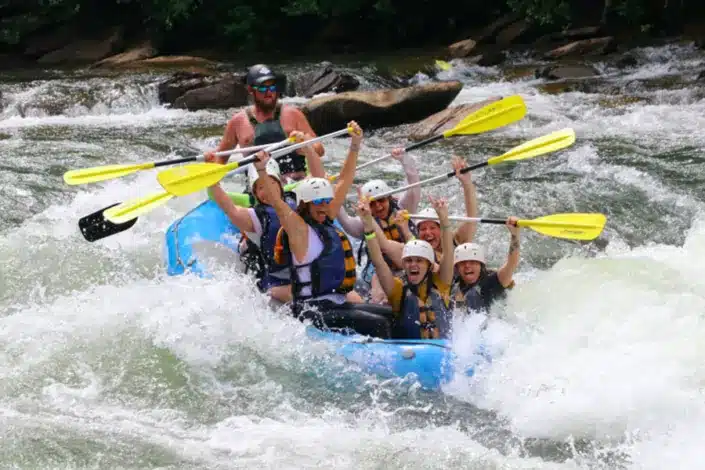
Because the Ocoee is dam-controlled, we have guaranteed water flows. When the dam releases, the river transforms into a continuous, five-mile roller coaster of Class III and IV rapids. There is very little flat water on the Ocoee—it is splash after splash, rapid after rapid.
What are the Key Features of the Ocoee?
- Reliability: We know exactly when the water will be there. No “low water” days ruining your reservation.
- Temperature: The water is generally pleasant, making those inevitable splashes refreshing rather than freezing.
- The Olympic Legacy: The Upper Ocoee was home to the 1996 Olympic Canoe and Kayak competitions, making it the only natural river to host such an event.
- Intensity: This is an adventure river. It requires active paddling and teamwork.
Now, let’s see how the competition stacks up.
How Does the Pigeon River Compare to the Ocoee?
The Pigeon River is located near the border of Tennessee and North Carolina, very close to Gatlinburg and Pigeon Forge. Its proximity to these major tourist hubs makes it a frequent topic of conversation for vacationers.
Is the Pigeon River as Exciting as the Ocoee?
In short: The Upper Pigeon is fun, but it is much shorter and less continuous than the Ocoee.
The Pigeon River is divided into two sections. The Lower Pigeon is very calm—essentially a float trip suitable for toddlers and young children. The Upper Pigeon offers Class III rapids, which can be exciting, but the run is significantly shorter than the Ocoee’s Middle section.
What are the Main Differences?
- Duration: A trip down the Upper Pigeon is often over in about an hour or so of river time. The Middle Ocoee offers a longer, more sustained experience with more rapids per mile.
- Water Quality: Historically, the Pigeon has battled industrial runoff, earning it the nickname “The Dirty Bird” among locals. While cleanup efforts have improved it vastly, the Ocoee’s water, flowing through the National Forest, feels cleaner and fresher.
- Flow Reliability: The Pigeon also relies on dam releases, but the schedule can be less consistent than the Ocoee, especially in shoulder seasons.
The Verdict: If you only have a couple of hours to spare and are staying in Gatlinburg, the Pigeon is a convenient “quick fix.” But if you want a full half-day adventure that leaves you buzzing with adrenaline, the Ocoee is worth the drive.
Is the Nantahala River Better for Families than the Ocoee?
The Nantahala River, located near Bryson City, NC, is a staple of Southeast rafting. It is famous for its scenic beauty and its incredibly cold water.
How Cold is the Nantahala?
The Nantahala is bottom-release dam water, meaning it comes from the bottom of a deep lake. It hovers around 45–50 degrees Fahrenheit year-round. Even in the middle of July, a swim in the Nantahala can take your breath away. In contrast, the Ocoee warms up nicely in the summer, making swimming a joy rather than a shock.
Is the Whitewater Intense on the Nantahala?
The Nantahala is primarily a Class II river. This means it consists mostly of swift-moving water and small waves. There is really only one significant rapid—Nantahala Falls (Class III)—at the very end of the eight-mile trip.
This makes the Nantahala distinct from the Ocoee:
- Ocoee: Continuous Class III-IV action. You are paddling hard and hitting big waves constantly.
- Nantahala: Long stretches of calm floating with occasional paddling.
The Verdict: The Nantahala is a great option for families with children under 12 (the Ocoee’s cutoff age) or for those who want to relax and look at trees. However, for teenagers, bachelor parties, or anyone seeking a thrill, the Nantahala can feel a bit slow. On the Ocoee, the action never stops.
How Does the Chattooga River Stack Up Against the Ocoee?
The Chattooga River (on the GA/SC border) is famous for being a “Wild and Scenic” designated river. This means no roads, no buildings—just pure wilderness. It was also the filming location for the movie Deliverance.
What is the Difference Between Free-Flowing and Dam-Controlled?
This is the biggest differentiator. The Chattooga is a free-flowing river. It relies entirely on recent rainfall for its water levels.
- High Water: If it rains hard, the Chattooga can become dangerous and trips may be canceled.
- Low Water: If it hasn’t rained in a while (common in late summer), the river can become a “rock garden” where you spend more time dragging the raft over stones than paddling.
The Ocoee does not have this problem. Thanks to the TVA dam system, we have perfect water levels scheduled months in advance.
Is the Chattooga Rapids Experience Different?
Yes. Section IV of the Chattooga features some intense Class IV-V drops (like the famous Five Falls), but they are separated by long pools of flat water. You paddle hard for 30 seconds, then float for 15 minutes.
On the Ocoee, the gradient is steeper and more consistent. You don’t have those long lulls between the action.
The Verdict: The Chattooga is a beautiful wilderness experience for those willing to gamble on water levels. But for a guaranteed high-octane trip where you know exactly what you are getting, the Ocoee is the safer bet for planning a vacation.
Which River Should You Choose?
To simplify your decision, here is a quick breakdown based on what you might be looking for:
- For Maximum Adrenaline: The Ocoee River. Specifically, our Full River Experience which combines the Upper and Middle sections for 10 miles of whitewater.
- For Young Kids (Under 12): The Nantahala or Lower Pigeon. These are gentle enough for younger adventurers.
- For a Quick Trip Near Gatlinburg: The Pigeon. It’s accessible, though short.
- For Wilderness Solitude: The Chattooga. Just be sure to check the rain gauge before you go.
Why Outland Expeditions on the Ocoee is the Ultimate Choice
At Outland Expeditions, we believe the Ocoee River offers the perfect balance of thrill, safety, and fun. It is challenging enough to make you feel like a hero, but safe enough for first-timers to enjoy with our expert guides.
We offer three distinct ways to experience the river:
- The Middle Ocoee: The classic 5-mile stretch of non-stop hits.
- The Upper Ocoee: The site of the 1996 Olympics, featuring bigger drops and technical moves.
- The Full River Experience: A full day of adventure combining both sections with a lunch break.
Don’t leave your vacation fun up to chance (or rainfall). Choose the river that delivers world-class whitewater every single time.
Ready to hit the rapids?
Contact Outland Expeditions today to book your Ocoee River adventure. Spots fill up fast, so secure your seat on the raft now!
Frequently Asked Questions (FAQ)
Is the Ocoee River harder than the Nantahala?
Yes, significantly. The Ocoee River is rated Class III-IV, meaning it has large, irregular waves and requires maneuvering. The Nantahala is primarily Class II (gentle waves) with only one Class III rapid at the end. The Ocoee is a high-adventure trip, while the Nantahala is more of a scenic float.
Can beginners raft the Ocoee River?
Absolutely! While the Ocoee is thrilling, no previous experience is required. At Outland Expeditions, a professional guide steers every raft. As long as you are at least 12 years old and can paddle when instructed, you can have an amazing time on the Ocoee.
Why is the Ocoee River dam-controlled?
The Ocoee River flow is regulated by the Tennessee Valley Authority (TVA). They release water from the dam on a specific schedule (mostly weekends in spring/fall and five days a week in summer). This guarantees excellent water levels for rafting, unlike natural-flow rivers that can get too low or too high based on rain.
Which river is closest to Gatlinburg, TN?
The Pigeon River is the closest to Gatlinburg (about 45 minutes away). However, many visitors find the 2-hour drive to the Ocoee River well worth the trip for the superior water quality, longer rapids, and more exciting experience.
What is the age limit for the Ocoee vs. other rivers?
The Tennessee State Parks require all rafters on the Ocoee River to be at least 12 years old. The Nantahala and Pigeon rivers often allow children as young as 7 or 8 (or even younger on lower sections) because the water is calmer. If your group is all 12+, the Ocoee offers a much more engaging experience.


Leave a Reply
Want to join the discussion?Feel free to contribute!