
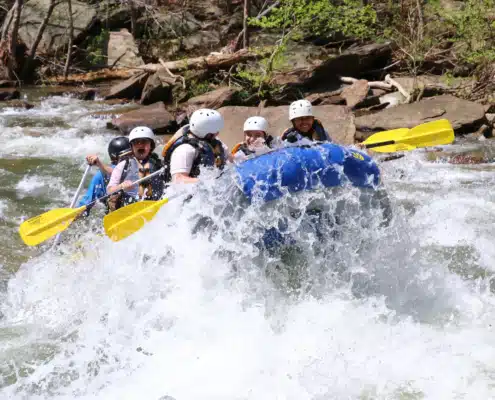
Understanding Whitewater Rapid Classifications (Explained Simply)
Planning an outdoor adventure on the water can feel intimidating when you start seeing terms like “Class III hydraulics” or “Class IV drops” tossed around. If you are booking a trip for your family, a corporate group, or your own weekend getaway, you deserve to know exactly what those numbers mean. You do not need to be a hydrologist to understand how rivers are graded.
The international scale of river difficulty is a standardized system that ranks rapids from Class I to Class VI. This scale measures a river’s technical demands, wave structures, and the overall rescue environment. Understanding these tiers helps you pick a trip that matches your group’s appetite for excitement while ensuring a fun, rewarding experience on the water.
At Outland Expeditions, we have spent decades safely guiding thousands of guests down the legendary rapids of East Tennessee. In this guide, we will break down the entire classification system using simple, everyday language. We will also show you how these ratings apply to real-world river runs so you can book your next trip with total confidence.
What Is the International Scale of River Difficulty?
The International Scale of River Difficulty is the universal benchmark used by park rangers, commercial outfitters, and private paddlers to rate sections of moving water. This system evaluates a river based on its physical characteristics rather than its emotional impact. It looks at the size of the waves, the presence of hidden boulders, the complexity of required maneuvers, and how difficult it would be to rescue someone who falls out of the boat.
It is vital to know that river classifications are never permanently fixed in stone. A rapid that is an easy-going run at normal water flows can transform into a turbulent hazard during heavy spring snowmelts or flash rains. Conversely, exceptionally high water can sometimes completely drown out rocky obstacles, making a technical rapid smoother. Seasoned outfitters constantly monitor real-time water flows to ensure that commercial trips remain well within safe operating boundaries.
This scale is also non-linear, meaning the difficulty and risks jump significantly with each numerical step. Moving from a Class II to a Class III rapid introduces a whole new level of wave activity and maneuvering. Jumping from a Class IV to a Class V canyon requires elite physical fitness and flawless execution. For context, most commercial rafting trips across the United States operate primarily on Class II, III, and IV waterways to balance genuine thrill with a manageable environment.
What Are Class I Whitewater Rapids?
Class I rapids represent the absolute gentlest tier of moving water on the international scale. These sections feature fast-moving currents with small, rhythmic ripples or tiny waves that pose virtually no risk to watercraft. The river channel is wide open, free of complex obstacles, and easily navigable without any specialized paddling techniques or prior watermanship training.
You will typically find Class I water on lazy-river tubing routes, scenic float trips, and flat-water canoeing corridors. It provides a relaxing environment where your primary focus is taking in the surrounding scenery rather than managing technical hazards. Life jackets are still standard safety gear, but the physical demands are minimal enough for paddlers of almost all ages and fitness levels.
What Are Class II Whitewater Rapids?
Class II rapids are officially designated for novice paddlers who are comfortable with the basics of moving water. These sections feature wide, clear channels with medium-sized waves that are easy to spot and avoid. While the water is noticeably more active than a Class I float, the paths through the rapids are straight and obvious to see from a distance.
In a Class II rapid, you might need to perform minor, occasional steering adjustments to bypass a visible rock or an exposed gravel bar. If a paddler happens to slip out of the boat into the current, self-rescue is generally straightforward because the water pools out into calm, quiet zones directly below the waves. It offers a fantastic entry point for young kids or cautious beginners who want to experience the sensation of splashing water without any stressful maneuvering.
What Are Class III Whitewater Rapids?
Class III rapids are classified as intermediate white water and represent the point where a river begins to show its true power. These sections feature moderate, irregular waves that are easily capable of taking a raft off its intended course if the crew is not actively paddling. You will encounter distinct river features like tight eddies, small vertical drops, and rolling wave trains that splash over the sides of the raft.
The Technical Shift: In Class III water, proper boat control becomes mandatory. Teams must work together to execute precise maneuvers around large boulders, breaking waves, and fast-moving currents.
The river channels narrow down, meaning that the correct path through the rapid is not always immediately apparent from the water level. For unguided private groups, scouting the rapid from the riverbank before running it is highly recommended. For guided commercial trips, a professional trip leader will know the exact lines to take, using the crew’s collaborative paddle strokes to steer safely through the churning water.
What Are Class IV Whitewater Rapids?
Class IV rapids are advanced, high-energy stretches of river that deliver a heart-pounding outdoor experience. These rapids feature intense, powerful waves, narrow granite gorges, and swift, turbulent crosscurrents that require precise boat handling. You will frequently encounter long, congested fields of boulders, steep drops, and powerful vertical hydraulics that demand rapid, decisive team reactions.
Navigating Class IV water leaves very little room for error. The paddlers must function as a cohesive unit, listening to their guide’s commands to drive the raft through specific technical gates. If a raft spins or misses an eddy move, the risk of a flip or a swimmer increases noticeably. Furthermore, because the rapids are often continuous with fewer calm pools between drops, executing a water rescue requires specialized swiftwater training and professional safety gear.
This is the exact class of water that makes the Ocoee River so famous across the country. Stretches like the Olympic Course and the Classic Middle section feature world-class Class IV drops that test your reflexes and leave you completely soaked. It is an ideal tier for adventurous first-timers, corporate team-building events, and returning whitewater enthusiasts who want an authentic, action-packed challenge.
What Are Class V Whitewater Rapids?
Class V rapids are reserved strictly for expert whitewater paddlers who possess advanced technical skills, high-end physical conditioning, and extensive real-world experience. These rapids are incredibly long, violently turbulent, and heavily obstructed by dangerous geological features. You will find massive, unpredictable holes, mandatory vertical waterfalls, and tight, high-consequence chutes that require flawless execution.
In a Class V environment, the physical and mental stress on a paddling crew is immense. The rapids can go on for long stretches without a single break, meaning a swimmer could be carried a long distance through hazardous rock sieves and violent hydraulics before reaching safety. Because of these extreme rescue complications, running Class V water requires specialized safety plans, backup throw ropes, and highly experienced safety kayakers stationed downstream. This tier is generally not suited for standard commercial tourist trips or casual family outings.
What Are Class VI Whitewater Rapids?
Class VI rapids represent the absolute ceiling of the international scale, often described by outdoor professionals as extreme or inspirational water. These rapids are so violently turbulent, structurally complex, and structurally hazardous that they are widely considered entirely unrunnable by normal safety standards. The scale of risk is so severe that a single technical error or equipment failure carries potentially catastrophic consequences.
These sections are only attempted by elite, professional expedition teams who have spent years studying hydrology and technical rescue. They wait for perfect water levels, scout every square inch of the rapid from the banks, and deploy extensive safety personnel with ropes and communication gear. Once a Class VI rapid is successfully run a few times at a specific water level, it is occasionally reclassified as a high-end Class V run, but it always commands absolute respect from the outdoor community.
How Does the Ocoee River Fit Into the Whitewater Scale?
To see how these abstract classifications translate into a real adventure, look no further than Tennessee’s famous Ocoee River. The Ocoee is a premier destination for Class III and Class IV whitewater rafting in the United States. Because its water flows are controlled by upstream dams managed by the Tennessee Valley Authority, the river delivers consistent, predictable, and high-volume whitewater without the extreme seasonal drop-offs found on free-flowing wild rivers.
The Middle Ocoee is Tennessee’s classic commercial whitewater run, covering five miles of continuous action through the Cherokee National Forest. This section features 13 named rapids that build steadily in intensity. It is the perfect blend of intermediate and advanced white water, offering big waves and splashing drops while remaining accessible to adventurous first-timers and families with teens aged 12 and up. Notable rapids on this stretch include Grumpy, a Class III introduction that tests your crew’s paddling rhythm, and Broken Nose, a Class III-IV multi-tiered drop requiring a clean entry angle. Further down, you run Table Saw, a powerful Class IV wave train culminating in a massive breaking wave, followed immediately by Hell’s Hole, a vertical hydraulic wave that provides a dramatic finale.
The Upper Ocoee delivers a completely different, highly technical paddling experience. This section contains the actual whitewater slalom course built for the 1996 Atlanta Olympic Games. It is a narrow, modified granite channel where the water moves with incredible speed and technical precision. On this stretch, you will encounter Humongous, a massive Class IV rapid featuring a steep drop and a giant hole that requires a precise entry angle. You will also navigate Godzilla, a fast compression wave train where the river squeezes through rock walls to create high-splashing waves, and Edge of the World, a classic drop where the entire river pours over a distinct shelf.
If you cannot decide between the two, Outland Expeditions offers a combined Full Ocoee River Experience. This comprehensive six-hour adventure lets you conquer both the Olympic Upper section and the Classic Middle section back-to-back, with a full riverside lunch included to keep your energy high. It is the gold standard for anyone looking to fully experience Class III and IV whitewater in a single, action-packed day.
Ready to Experience the Thrill of the Ocoee River?
Now that you understand how whitewater rapid classifications work, you are ready to see what a Class III and Class IV river looks like in real life. Whether you want a half-day splash through the classic Middle Ocoee or want to push your limits on the technical Olympic Course, Outland Expeditions delivers an unforgettable day on the water.
Our professional guides handle all the logistics, top-tier safety gear, and navigation, allowing you to focus purely on the excitement of the river. Do not let another summer slip away at home. Contact Outland Expeditions today to secure your spots on the raft and start planning your next great outdoor adventure!
Frequently Asked Questions About Whitewater Classifications
Do I need prior experience to raft Class III or Class IV rapids?
No, you do not need any prior rafting experience to participate in guided Class III or Class IV trips with Outland Expeditions. Our professional, certified river guides provide a comprehensive safety briefing and paddle-stroke instruction before you ever touch the water. As long as you are a comfortable swimmer, in reasonable physical condition, and at least 12 years old, our guides will coach you through the rapids safely.
Is a Class IV rapid dangerous for a beginner?
While Class IV rapids feature large waves and swift currents, the risks are heavily minimized on a commercially guided trip. Outland Expeditions provides all guests with premium safety equipment, including Coast Guard-approved personal flotation devices (PFDs) and protective helmets. Our guides are rigorously trained in swiftwater rescue techniques and know the safest routes through every drop, making it an exciting yet structured adventure for beginners.
What is the minimum age and weight limit for rafting the Ocoee River?
Due to the powerful nature of Class III and Class IV white water, the state of Tennessee mandates a minimum age of 12 years old for anyone rafting the Ocoee River. Additionally, for safety and proper equipment fitting, participants should weigh at least 90 pounds. These guidelines help ensure that every paddler can safely sit in the raft, hold their paddle correctly, and handle the physical nature of the waves.
What should I wear when rafting Class III-IV white water?
You should wear quick-drying athletic clothes, such as a swimsuit or synthetic shorts and a tech shirt. Avoid cotton fabrics entirely, as cotton holds water and can make you feel cold and uncomfortable during a long day on the river. For footwear, you must wear water shoes or old sneakers that secure tightly to your feet; flip-flops or slip-on sandals without a heel strap are not permitted on our rafts.
Can a rapid’s classification change during the day?
Yes, a rapid’s rating can change based on fluctuating water volumes. On dam-controlled rivers like the Ocoee, water releases are strictly regulated to maintain a consistent, predictable flow rate during scheduled trip times. However, unexpected heavy rainfall or extreme weather can alter the water level, which is why our guiding staff constantly monitors the river conditions to guarantee a safe, optimal trip experience.
What happens if I fall out of the raft in a Class III or IV rapid?
If you fall out of the boat, the most important step is to remain calm and follow the safety instructions provided during your pre-trip briefing. You will typically be instructed to adopt the “white-water swimming position”—lying on your back with your feet pointing downstream to buffer against rocks. Your guide will quickly deploy a throw rope or maneuver the raft to pull you back into the boat via your PFD shoulder straps.


Leave a Reply
Want to join the discussion?Feel free to contribute!