
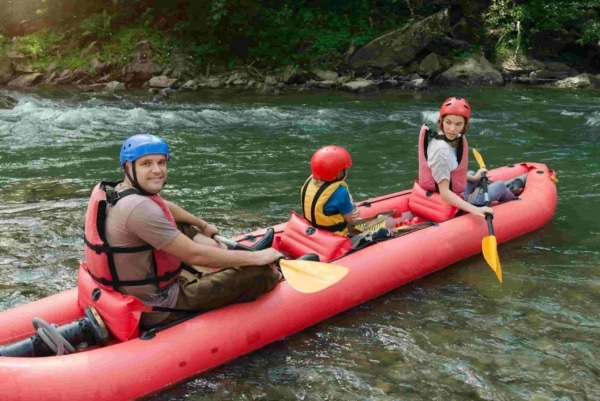
What Not to Wear Whitewater Rafting: A Complete Guide
Getting ready to tackle the roaring rapids of the Ocoee River is an exhilarating experience. You have booked your trip, gathered your friends, and are counting down the days until you hit the water. However, if you are packing your bags without knowing what not to wear whitewater rafting, you might be setting yourself up for an uncomfortable day.
Whitewater rafting is an active, wet, and dynamic outdoor sport. The clothing you choose directly impacts your safety, your core body temperature, and your overall enjoyment on the river. When you hit legendary Class III and IV rapids like Hell’s Hole or Diamond Splitter, you will get completely soaked by splashing waves. If you are wearing the wrong fabrics, that water will quickly turn your adventure into a shivering, uncomfortable ordeal.
As seasoned river professionals at Outland Expeditions, we have seen every wardrobe mistake in the book. We want your focus to be on the stunning scenery of the Cherokee National Forest and the thrill of the rapids, not on soggy jeans or lost shoes. Let’s dive into the essential guidelines on what to leave in your suitcase before heading to the river.
Why Is Cotton the Ultimate Mistake in What Not to Wear Whitewater Rafting?
If you ask any outdoor expert about what not to wear whitewater rafting, cotton is always the first answer. There is an old saying in the outdoor industry: “Cotton is rotten.” This is because cotton fibers are incredibly absorbent, acting like a giant sponge when exposed to moving water.
Instead of wicking moisture away, a cotton t-shirt or sweatshirt traps cold river water directly against your skin. This creates an evaporative cooling effect that rapidly draws essential body heat away from your core. Even on a hot summer day in Tennessee, wearing wet cotton in the shaded Ocoee River canyon can leave you shivering uncontrollably.
Furthermore, wet cotton loses all its structural integrity and becomes heavy and clingy. This clinging fabric severely restricts your upper body mobility, making it much harder to paddle effectively through intense rapids. It also causes intense chafing in sensitive areas, especially under your arms where you are constantly moving the paddle. Always leave the vintage concert tees and cotton hoodies at home.
Why Do Denim Jeans Create a Dangerous Whitewater Rafting Experience?
Denim is made from tightly woven cotton, which means it shares all the negative thermal properties mentioned above, but on a much heavier scale. Wearing jeans on a whitewater raft is one of the most uncomfortable choices a paddler can make. When denim gets completely saturated, it takes hours—sometimes even days—to dry out completely.
Beyond mere discomfort, wet denim is actually a safety hazard in moving water. If you happen to take an unexpected swim in the Middle Ocoee, wet jeans add unnecessary weight to your lower half. This sudden weight restricts your leg movement, making it incredibly difficult to swim defensively or pull yourself back into the raft.
Additionally, the thick seams on denim jeans are notorious for causing painful chafing when combined with wet skin and constant friction. You will be sitting on the edge of a rubber raft, shifting your weight constantly to navigate rapids like Table Saw and Double Trouble. Heavy, wet denim will grind against your skin with every single paddle stroke.
Will Flip-Flops and Loose Sandals Ruin Your Ocoee River Rafting Trip?
Your choice of footwear is arguably the most critical wardrobe decision you will make for your rafting trip. Flip-flops, slides, and Crocs without an engaged heel strap are entirely useless on a whitewater river. In fact, the powerful, swirling currents of the Ocoee River will strip loose footwear off your feet in a matter of seconds.
Every season, the riverbed claims hundreds of flip-flops lost by unprepared rafters. Once you lose your shoes, you are forced to walk on slick, jagged river rocks barefoot, which is highly dangerous. At Outland Expeditions, our safety guidelines strictly prohibit guests from wearing sandals without a secure heel strap while on the raft.
You also need footwear that provides solid traction inside the raft itself. When bracing yourself through intense whitewater, your feet are your primary anchor points. A secure, grippy sole keeps you locked into the boat safely, whereas bare feet or slick flip-flops will cause you to slide around uncontrollably.
Are Heavy Hiking Boots Safe to Wear on a Raft?
While we strongly advise against flimsy footwear, overcompensating with massive hiking boots is equally problematic. Heavy leather hiking boots or thick work boots are designed to stay dry and provide rigid ankle support on dirt trails. Once completely submerged in the Ocoee River, they become massive liabilities.
Thick boots will rapidly fill with water, acting like literal anchors attached to your feet. If you end up in the water, trying to kick and swim with waterlogged boots is exhausting and highly dangerous. It severely hampers your ability to adopt the proper swiftwater swimming position needed to navigate around rocks.
Furthermore, large, bulky boots can easily get wedged under the inflated cross-tubes of the raft. River safety relies on your ability to move quickly and freely if the raft shifts unexpectedly. If your foot is trapped because your boot is too big, you risk serious lower leg injuries.
Why Should You Leave Jewelry and Expensive Sunglasses Off the River?
Whitewater rafting is a high-impact, chaotic, and splash-heavy activity. Any loose accessories you bring onto the raft are highly likely to end up at the bottom of the river permanently. Professional guides often refer to this as the “river tax”—the inevitable toll the river takes on unprepared gear.
Cold river water naturally causes your fingers to shrink slightly, making rings much looser than usual. It is incredibly common for wedding bands or valuable rings to slip right off a paddler’s finger while gripping a wet paddle. Leave all valuable jewelry locked safely in your vehicle or, better yet, left at home.
The same strict rule applies to expensive designer sunglasses and delicate prescription eyewear. If you wear $200 aviators on a Class IV rapid without a retention strap, you probably won’t be wearing them by the end of the trip. If you absolutely must wear glasses or sunglasses, you must secure them with a tight, high-quality retention strap.
Will Heavy Jackets and Hoodies Interfere With Your Life Jacket?
When considering what not to wear whitewater rafting, you must factor in how your clothing interacts with your essential safety gear. Every rafter must wear a properly fitted, Coast Guard-approved Personal Flotation Device (PFD). At Outland Expeditions, we provide these high-quality PFDs for every guest before they step near the water.
Bulky clothing, such as heavy winter coats, oversized hoodies, or thick knitted sweaters, prevents the PFD from sitting snugly against your torso. If your life jacket cannot be tightened properly, it will ride up around your neck or slip off entirely in turbulent water. Your safety equipment can only protect you if it fits correctly.
If you are rafting during the cooler months of spring or fall, smart layering is the correct approach. Instead of one massive jacket, wear multiple thin layers of synthetic fleece or specialized thermal underwear. If the conditions demand it, Outland Expeditions provides professional-grade wetsuits to keep you warm without adding dangerous bulk under your PFD.
Are String Bikinis and Loose Board Shorts a Bad Idea for Paddling?
It is easy to assume that because you will be in the water, standard beach swimwear is the perfect choice. However, lounging leisurely by a pool is a very different activity than aggressively paddling through whitewater. Wardrobe malfunctions are incredibly common for rafters wearing unsupportive, flimsy swimwear.
String bikinis, strapless tops, and unlined board shorts tend to shift, slip, or come untied in strong river currents. You will be reaching, twisting, and pulling with your paddle for miles at a time. You do not want to have to stop paddling in the middle of Godzilla rapid to adjust a slipping swimsuit strap.
Instead, women should opt for athletic, one-piece swimsuits, sports bras, or secure two-piece athletic cuts. Men should wear board shorts with a secure drawstring waist and a supportive inner liner. Remember, this swimwear will serve as your base layer beneath your other quick-dry clothing.
What Should You Wear Instead for the Best Ocoee River Experience?
Now that we have covered the absolute worst clothing choices, let’s look at how to build the perfect rafting outfit. Your goal is to wear lightweight, quick-drying materials that protect you from the sun and retain warmth when wet. This ensures you stay comfortable from the Upper Olympic section all the way through the Classic Middle Ocoee.
Start with a secure athletic swimsuit as your foundational base layer. Over that, wear a synthetic, moisture-wicking t-shirt or a long-sleeve rash guard. These materials—like polyester, nylon, or spandex blends—dry incredibly fast and offer excellent UV protection against the intense Tennessee sun.
For your lower half, quick-dry athletic shorts or specialized nylon river pants are the ideal choice. Ensure your footwear consists of closed-toe water shoes, secure river sandals, or old lace-up sneakers that you don’t mind getting wet. Finally, apply plenty of waterproof sunscreen before arriving, as the sun reflects intensely off the water’s surface.
Ready to Conquer the Ocoee River?
By knowing exactly what not to wear whitewater rafting, you set yourself up for a phenomenal, stress-free day on the water. Proper gear allows you to paddle effectively, stay warm, and fully immerse yourself in the unparalleled thrill of the rapids. Now that your wardrobe is sorted, all that is left is to actually book your adventure.
Outland Expeditions is proud to offer the Full Ocoee River Experience, covering over 20 named rapids across 10 exhilarating miles of whitewater. We handle all the technical gear, transportation, and even provide a riverside lunch between the Upper and Middle sections. When you return to our outpost in Cleveland, TN, clean changing rooms and hot showers will be waiting for you.
Don’t let the ultimate Tennessee outdoor adventure pass you by. Contact Outland Expeditions today at (800) 827-1442 or visit our booking page to secure your raft. Grab your quick-dry gear, leave the cotton at home, and come experience the unmatched rush of the legendary Ocoee River!
Frequently Asked Questions
Do I need to wear a wetsuit for whitewater rafting?
In the peak summer months of June through August, the warm weather usually makes a wetsuit unnecessary. However, if you are rafting in the cooler spring or fall months, a wetsuit is highly recommended to prevent hypothermia. Outland Expeditions provides professional wetsuits for our guests at no extra charge when weather conditions require them.
Can I go barefoot while whitewater rafting?
No, going barefoot is extremely dangerous and strictly prohibited on all guided rafting trips. You need secure footwear to lock your feet inside the raft and keep your balance while aggressively paddling. Furthermore, if you end up in the water, barefoot walking on slick, sharp river rocks can cause severe foot injuries.
Should I wear a hat while rafting on the Ocoee River?
You will be required to wear a hard-shell whitewater helmet provided by Outland Expeditions for your safety on the river. Because the helmet must fit snugly directly against your head, bulky hats or large sun hats cannot be worn underneath. You can, however, wear a thin synthetic skull cap or low-profile visor under the helmet to keep the sun out of your eyes.
Are water shoes or old sneakers better for rafting?
Both options work exceptionally well for whitewater rafting, provided they have good tread and a very secure fit. Water shoes are specifically designed to drain water and dry quickly, making them highly comfortable. Old lace-up sneakers offer fantastic foot protection and grip, just expect them to stay soggy for the ride home.
Can I wear my prescription glasses on the raft?
Yes, you can wear your prescription glasses, but they must be secured tightly with a high-quality retention strap. The rapids on the Ocoee River are powerful and splash heavily; without a strap, your glasses will sink to the bottom of the river instantly. If you can see comfortably without them, it is always safest to leave valuable eyewear on land.


Leave a Reply
Want to join the discussion?Feel free to contribute!